The United Nations has officially designated 2026 as the International Year of Rangelands and Pastoralists. It sounds great on paper. Governments will issue press releases, international agencies will host high-level panels in Geneva and Rome, and high-ranking officials will talk about sustainability.
Then the year will end.
If we treat this global observance as just another calendar milestone, we fail the millions of people who actually manage the earth's most fragile environments. Pastoralism isn't a relic of the past. It's a complex, highly efficient science of survival that sustains food security across difficult terrain. Yet, these communities face relentless pressure from land grabs, climate shocks, and archaic government policies that view mobility as a crime rather than an ecological necessity.
The Scale of the Crisis
Rangelands cover roughly half of the earth's land surface. Think about the African savannas, the steppes of Central Asia, the high-altitude Andes, and the American West. These ecosystems store about 30 percent of the world's soil organic carbon.
Here is the problem: roughly half of these vital rangelands are currently degraded.
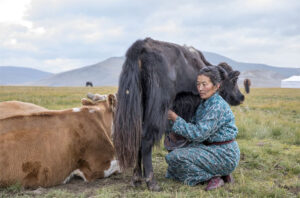
When policymakers talk about land restoration, they usually default to planting trees everywhere. That sounds nice to urban voters, but planting trees in natural grasslands destroys ancient ecosystems. Pastoralists know this. Their livestock—roughly 1 billion animals worldwide, including cattle, camels, yaks, and goats—are managed through strategic mobility to keep these landscapes healthy.
When governments restrict traditional migration routes with fencing, private land titles, and poorly planned agricultural expansion, the system breaks. Overgrazing happens not because pastoralists don't care about the land, but because they are trapped in shrinking parcels of territory.
Beyond the Symbolic Rhetoric
A symbolic year on the UN calendar doesn't put food on the table or secure land tenure. Real change requires dismantling decades of systemic bias.
Historically, colonial and post-colonial administrations labeled pastoralists as backward. They viewed mobile livestock herding as inefficient compared to intensive, fenced-in farming. That myth persists today inside ministries of agriculture across the global South and North alike. Bureaucrats prefer fixed maps, permanent addresses, and stationary tax bases. Mobility scares them.
To make 2026 matter, countries must rewrite national laws to legally recognize customary land rights. Communal land tenure is the absolute bedrock of pastoral survival. If herders cannot move their animals following seasonal rains and pasture regeneration, the ecosystem collapses, and poverty deepens.
What Real Action Looks Like
Real support isn't about charity handouts or textbook conservation projects designed by consultants who have never stepped foot in a desert. It requires concrete adjustments to how regional infrastructure and climate funds are spent.
First, invest in decentralized mobile services. Mobile schools, veterinary clinics, and solar-powered health stations match the reality of nomadic life. Forcing pastoralists to settle down in permanent, drought-prone villages just so they can access basic services destroys their economic independence and turns self-sufficient producers into aid dependents.
Second, integrate indigenous knowledge into climate adaptation plans. Pastoralist communities have tracked weather patterns, plant species behaviors, and watershed changes for centuries. They don't need a lecture on climate change adaptation; they are living it. Their traditional management practices often outperform modern, top-down conservation models.
Third, fix market access. Pastoralists produce high-quality, organic meat and dairy, yet they often get squeezed by middlemen and restrictive cross-border trade barriers. Fair value chains ensure that the people protecting the rangelands actually share in the economic rewards.
Stop Ignoring the Frontline Stewards
We are running out of time to fix how we treat drylands and open spaces. Climate shocks are intensifying droughts and floods, making historical migration patterns more volatile than ever.
If 2026 remains merely symbolic, the landscape will show the scars. Rangelands will continue to degrade, indigenous knowledge will vanish with the older generations, and rural displacement will fuel urban migration crises.
Governments, international bodies, and civil society must move past empty declarations. Secure the land routes, respect local governance, and treat pastoralists as essential partners in planetary survival rather than an inconvenient demographic to be modernized away.