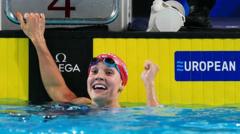
Stop looking at swimming as a sport decided solely in the opening lane. Angharad Evans just proved in Paris that the back half of a race matters more than anything else.
At the European Championships, the British star didn't just win gold in the 100m breaststroke; she completely dismantled the field with a record-shattering swim of 1:04.87. If you watched the race, you saw a masterclass in pacing. She turned fourth at the 50-meter mark before hunting down everyone in front of her.
This victory marks a massive turning point for British swimming. Let us look at what actually went down in the pool, why this specific performance changes her career trajectory, and what aspiring racers can learn from her relentless closing speed.
The Race That Rewrote the Record Books
When Evans hit the wall in 1:04.87, she didn't just take home the continental title. She smashed her own national record and set a fresh championship standard.
Let us break down the splits because they tell an incredible story. Ireland's Mona McSharry went out fast, touching near the front and eventually claiming silver in 1:05.41. Evans was buried back in fourth at the halfway turn, splitting 30.82. Most swimmers panic when they see the field pulling away. Evans didn't flinch.
She came home in 34.05 seconds. That final 50-meter split was faster than anyone else in the entire field by more than half a second. She erased a deficit through sheer anaerobic power and technical discipline, leaving Italy's Benedetta Pilato to settle for bronze.
Why the Second 50 Matters Most
Swimmers often obsess over getting a clean start. They want to lead from the blocks. Evans flips that philosophy on its head.
Her training at the University of Stirling under elite guidance has clearly focused on building an engine that does not fade. While competitors tire and lose their stroke efficiency in the final meters, Evans maintains her catch and pull.
If you want to understand why she is currently ranked as the fastest performer in the world this season, look at her stroke rate consistency. Most breaststrokers lose momentum during the glide phase. Evans keeps her hips high and drives forward. It is a technical adjustment that separates regional finalists from international champions.
From Almost Quitting to Continental Gold
We tend to look at gold medalists and assume their path was smooth. Evans had a wildly different journey.
A few years ago, after a stint at the University of Georgia in the United States, she was on the verge of walking away from the sport entirely. Moving back to the UK and resetting her training environment at Stirling saved her career. She went from finishing third at domestic meets in 1:08 to dominating international finals in the mid-1:04s.
That kind of progression requires mental toughness. When you miss out on peak form at major events—like she did during her tough outing at previous global championships—it is easy to lose confidence. Instead, she adjusted her mindset, trusted her aerobic base, and started breaking records.
What This Means for the Rest of the Season
The European title is massive, but the broader swimming landscape is shifting. With times dropping into the 1:04 range, Evans has put the global elite on notice.
She is three-for-three in breaking records every time she hits the water at this meet. That level of consistency separates good athletes from legends.
If you are tracking elite swimming development, watch how Evans manages her racing schedule moving forward. The key takeaway from her Paris gold is simple: build your endurance so you can finish races faster than everyone else starts them.
Take that mindset into your own training sessions today. Stop worrying about leading at the start and focus on who touches the wall first.