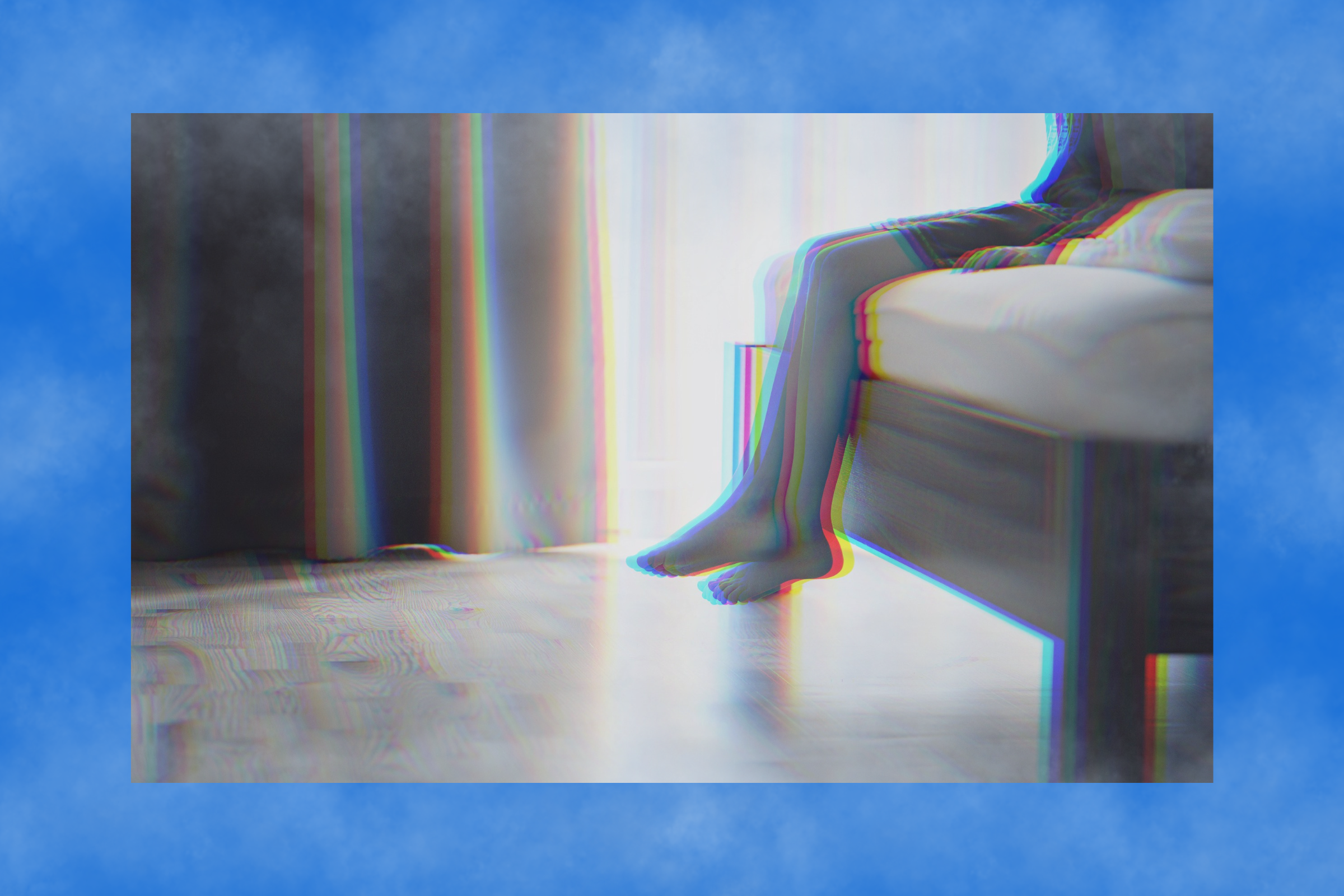
You are staring at the ceiling again. It is 3 a.m. You have already calculated exactly how many hours of sleep you will get if you drift off in the next five minutes. You are frustrated. You are checking the clock. You are desperate.
Stop it. You are making your insomnia worse by simply staying in bed.
It feels logical to stay put. You are tired. You are resting. You assume that eventually, your brain will surrender and let you drift off. But sleep isn’t a task you can force, and treating it like one is the fastest way to stay alert. When you lie awake for hours, you aren’t resting. You are training your brain to treat your bed as a place for frustration, anxiety, and performance pressure.
The Problem With Staying Put
Your brain is a pattern-matching machine. If you consistently lie in bed while awake and annoyed, your brain learns that the bed is where you feel annoyed. This is what experts call "conditioned arousal." Eventually, just walking into your bedroom can trigger a subconscious spike in cortisol and heart rate. Your bed becomes a cue for wakefulness rather than rest.
Psychologist Richard Bootzin formalized this in 1972 through a technique called stimulus control. The core idea is simple: You must strip the bedroom of its association with frustration.
The 20 Minute Rule
If you haven’t fallen asleep after about 20 minutes, get up. Do not argue with yourself. Do not try to "tough it out." Leaving the room is the only way to break the loop.
I know what you are thinking. Getting up feels like admitting defeat. It feels like you are waking yourself up further. But you are already awake. Staying in bed is just adding a layer of performance anxiety to that wakefulness.
When you leave the bedroom, go to a different room. Keep the lights low. Do something boring. Read a physical book, fold laundry, or listen to soft music. Do not touch your phone. Do not check your email. Do not watch television. The goal is to get your brain to a state of neutral boredom, not to entertain yourself until you are exhausted.
Rebuilding the Association
Return to bed only when you feel genuinely sleepy. I do not mean "tired" or "done with the day." I mean those heavy-lidded, drifting-off sensations that you recognize right before a nap. If you go back and still can't sleep, get up again.
This process might sound exhausting the first few times. You might find yourself in the living room at 4 a.m. staring at the wall. That is fine. By getting up, you are sending a clear signal to your nervous system: "This bed is for sleep, not for stress."
Consistency is the boring secret to success. If you keep doing this, you will slowly retrain your brain. The bed will stop being a place of midnight math and start being the place where you shut down.
Common Pitfalls
- Checking the clock: Cover the clock or turn it around. Seeing the minutes tick by triggers the "how much sleep I will lose" calculation, which is a guaranteed way to stay alert.
- Using the bed for anything else: If you work, eat, or watch shows in bed, you have already weakened the association. Move those activities to the couch or a desk.
- Giving up too soon: Behavioral changes take time. If you try this for one night and see no miracle, don't quit. It takes time to undo months or years of conditioned habits.
Sleep is a natural process. You cannot force it to happen, but you can create an environment where it finds it easier to arrive. Get out of bed. Stop the performance. Give yourself the space to let sleep happen on its own terms.