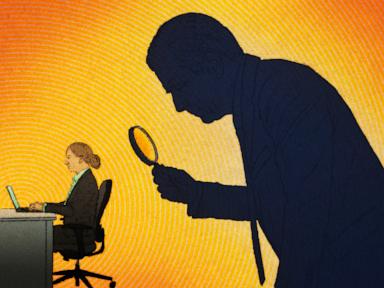
You’re sitting at your desk, mid-afternoon, maybe checking a personal email or scrolling a news site for five minutes. You assume you’re alone. You aren’t. In 2026, the digital eyes of your employer are likely fixed on your screen, your keystrokes, and even your "active" status.
Workplace surveillance isn't just about security anymore. It’s an aggressive data-gathering operation. About 74% of U.S. employers now use some form of online tracking to monitor work activities. If you think your boss is just checking your output, you’re missing the bigger picture. They are building a behavioral profile of you.
How the Digital Panopticon Works
Companies aren't hiding these tools under the rug anymore. They’re sold as "productivity analytics." You might see software names like Hubstaff or Teramind on your device. These programs do far more than track time.
- Keystroke logging: Every word you type, including passwords and private messages, can be recorded.
- Screen capture: Some tools take random screenshots or record your entire session.
- Biometric tracking: Facial recognition and attention-tracking software are creeping into remote meetings.
- Behavioral scoring: AI now assigns you a "productivity score." If your mouse stops moving for too long, your score drops.
Honestly, it’s creepy. It’s also incredibly common. Employers claim this is about accountability, but the data tells a different story. Research suggests that 75% of workers feel their job satisfaction plummets the moment they realize they’re being watched. When you’re constantly performing "work" for an algorithm, you aren’t actually working. You’re just mimicking the appearance of productivity.
The Hidden Cost of Constant Monitoring
Why does this matter? It’s not just about the loss of a lunch break. It’s about the erosion of trust.
I’ve seen this play out in real-time. When a manager relies on "bossware" to track an employee, the manager stops talking to the employee. They stop asking, "How can I help you finish this project?" Instead, they check a dashboard. They see an "idle" status and assume the worst.
This creates a toxic feedback loop. Employees notice they’re being tracked and start gaming the system. They move their mouse periodically or keep "work" apps open to avoid being flagged as inactive. This isn't efficiency. It’s theater.
The most alarming part? The turnover rate. About 42% of monitored employees plan to leave their jobs within a year. That’s nearly double the rate of those who aren't under the microscope. If you’re a leader, realize this: surveillance isn't a substitute for management. It’s a shortcut that destroys your culture.
The Legal Reality
You’re probably wondering if this is even legal. In the United States, the answer is mostly "yes."
Employers have a broad legal right to monitor your work on company-provided equipment. If you’re using a company laptop, assume everything you do is recorded. Most states don't have laws protecting your digital privacy while on the clock.
However, there are lines. The National Labor Relations Act (NLRA) still protects "concerted activity." That means your boss can't use surveillance to identify or suppress unionizing efforts or discussions about wages and working conditions. If you notice monitoring specifically targeting those conversations, that’s a massive red flag.
What You Should Do Today
Don't panic, but start acting like a professional who values their own privacy.
- Check the handbook: Look for an "Acceptable Use Policy" or a "Monitoring Disclosure." It’s often buried in the fine print of the paperwork you signed on day one.
- Segregate your devices: Never, ever use a work laptop for personal banking, personal emails, or private job hunting. Treat the device like a broadcast microphone. If you wouldn't say it in front of the CEO, don't type it on that machine.
- Use a separate phone: If you need to search for a new job or chat with a lawyer, do it on your own device, on your own network. Don't connect your personal phone to the corporate Wi-Fi if you’re concerned about being tracked.
- Ask the hard questions: If you’re being micromanaged by a dashboard, ask your supervisor about the metrics. "How is productivity being measured here?" Bringing the hidden surveillance into a transparent conversation can sometimes force a manager to realize how absurd their tracking system actually is.
Surveillance is the new status quo, but you don't have to be a victim of it. Understand what’s being tracked, secure your private life on separate hardware, and focus on delivering high-quality work that makes the dashboard metrics irrelevant. When your output is undeniable, even the most paranoid boss has to back off.
Keep your personal data offline and keep your professional focus on what truly moves the needle.