You have probably heard that humans became smart because we ate meat. The story goes that our ancestors started hunting, got plenty of protein, and suddenly our brains blew up in size. It sounds simple. It sounds like a great origin story. But honestly, it is mostly a myth.
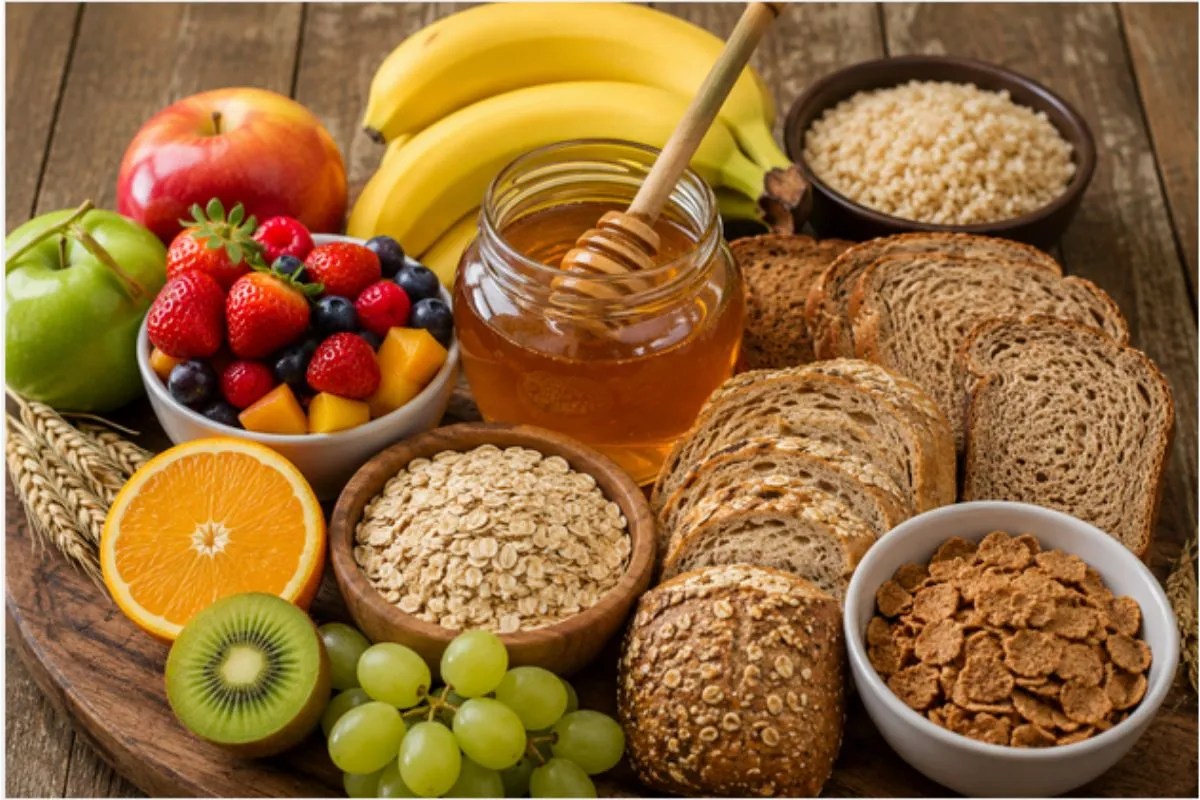
If you look at the evidence, the meat-only theory ignores a huge piece of the puzzle. Recent findings suggest that fruits, honey, and cooked starches did the real heavy lifting for our grey matter. Your brain is a glutton for glucose. It is time we stopped demonizing carbs and started looking at them as the actual reason we evolved into modern humans.
The brain is an energy hog
Consider how your brain works. It is only about two percent of your body weight. Yet, it burns through twenty percent of your resting energy. In young children, that number hits a staggering sixty-six percent. Protein and fat from hunting are great for muscles and sustaining long-term energy, but your neurons need quick, reliable fuel to fire signals. That fuel is glucose.
We often act like carbs are a modern invention or a dietary mistake. That is biological nonsense. Our ancestors spent millions of years foraging for sugar. They were hunting for honey and searching for ripe, high-energy fruit. They weren't just surviving on random leaves. They were actively seeking out the most concentrated energy sources they could find.
Cooking changed the game
One of the biggest shifts in our history was learning to control fire. This wasn't just about cooking meat to kill bacteria. It was about making starches accessible. Raw tubers and roots are incredibly difficult for the human gut to process. We do not have the massive, fermentation-heavy digestive tracts that gorillas have, because we outsourced that work to the campfire.
Cooking breaks down starches into simpler sugars. Once we started doing that, our bodies could access a constant, predictable supply of glucose. This allowed our brains to grow from the roughly 300-gram size of early hominids to the 1,500-gram powerhouse we have today.
Evidence hidden in your body
You can actually see this evolutionary adaptation in your own biology. Look at your teeth and your jaw structure. They are significantly smaller than those of our ancestors. We didn't need massive grinding tools anymore because we were eating softer, calorie-dense cooked food.
Even our genetics tell this story. We have specific genetic markers related to glucose metabolism that suggest our bodies have been optimized for a high-carbohydrate intake for a very long time. If we were strictly evolved for a high-meat, low-carb diet, our metabolism would look very different. The biological data points toward a diet that leaned heavily on accessible energy sources.
Stop fearing the fuel
There is a common misconception that because something is natural, it is always healthy, or that because we evolved to eat something, we should eat it in massive quantities today. That is a mistake. Yes, our brains love glucose, but our modern, sedentary lifestyle does not burn through energy the way our ancestors did.
The takeaway here is not that you should go out and start eating bags of sugar. The takeaway is that carbs are not the enemy of intelligence. They are the fuel that built the very organ you are using to read this right now. The next time you reach for a piece of fruit or consider the role of starches in your diet, remember that your brain was literally designed to seek them out.
Focus on high-quality, complex carbs that provide sustained energy. Stop trying to starve your brain of the fuel it craves. Eat real food, understand your biology, and move on.