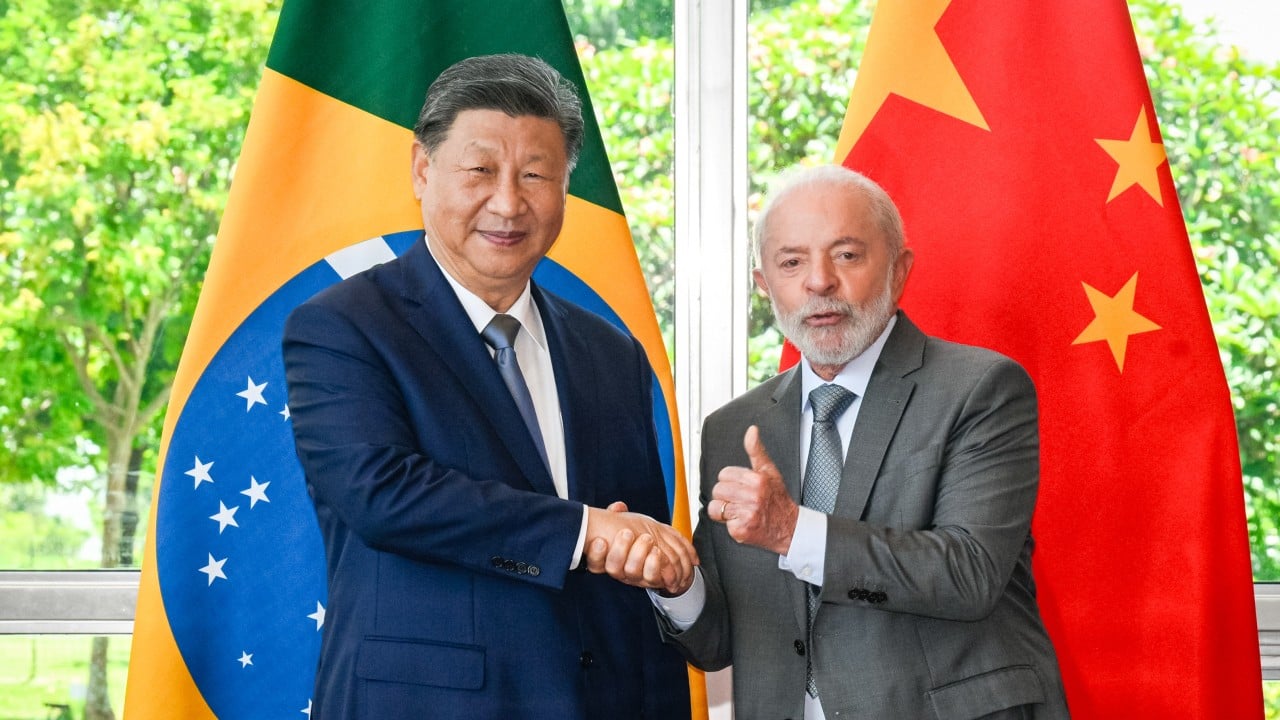
Washington thought heavy economic pressure would keep South America in line. Instead, it pushed Brasilia straight into Beijing's open arms. Trade maps are rewriting themselves in real-time, and old diplomatic resistance barriers are completely gone.
If you look at the numbers coming out of the American Chamber of Commerce for Brazil, the shift is staggering. The US share of Brazilian exports dropped to its lowest point since 1997, hitting just 9.4 percent. Meanwhile, China ballooned to claim nearly a third of everything Brazil sells abroad.
Tariffs change everything. When protectionist trade walls go up, supply chains simply route around them.
The Cost of American Pressure
For years, Brazilian policymakers tried to balance their relationships carefully between the world's superpowers. They didn't want to choose sides. Then the Trump administration introduced aggressive protectionist measures, including steep tariffs targeting Brazilian goods.
That heavy-handed approach broke years of diplomatic hesitation. Exports to the US dropped sharply, forcing exporters to look elsewhere for survival. Fruit growers pivoted toward India and Southeast Asia. Coffee traders sent more volume to Europe, where Germany stepped up to replace the US as a top buyer.
China took the lion's share of the redirected trade. Beijing didn't hesitate to capitalize on Washington's miscalculation.
Commodities Meet Manufactured Goods
This isn't a sudden accident. It's the acceleration of a decades-long trajectory. China already stands as the primary trading partner for fourteen individual Brazilian states, a complete reversal from twenty years ago when the US dominated regional export markets.
Raw materials drive this engine. Soybeans, iron ore, meat, and cellulose flow out of South American ports in massive quantities bound for Asian manufacturing hubs. In return, Chinese industrial products, heavy machinery, and electric vehicles flood back into Brazil.
Local economists worry about de-industrialization. They see an economy overly reliant on digging things out of the ground and growing crops. Yet when foreign markets slam their doors with protectionist surtaxes, pragmatism wins over long-term structural anxiety. Brasilia needed buyers, and Beijing was ready to write checks.
Political Fallout at Home
Trade policy rarely stays outside domestic politics. The pivot toward Beijing has turned into a fierce political football inside Brazil.
Critics of President Luiz Inacio Lula da Silva argue that tying the country's economic future too closely to Asia creates a new kind of dependency. At the same time, opposition figures find themselves caught in an awkward corner. Some political factions previously urged foreign pressure against Brasilia, only to watch those exact economic penalties hand Lula an easy domestic narrative about defending national sovereignty.
When foreign governments threaten local industries, national leaders find it remarkably easy to unite the public behind alternative trade alliances.
What Comes Next for Global Supply Chains
Global trade is ruthlessly efficient. Capital and commodities always find the path of least resistance.
Washington's ongoing investigations and proposed levies under trade acts assume that economic isolation can force compliance. Reality proves the opposite. Every percentage point of tariff added by the US simply deepens the commercial integration between South America and East Asia.
The resistance era in Brasilia is over. Supply chains adjusted, new shipping lanes locked in, and the economic center of gravity moved permanently westward across the Pacific.
Stop expecting old alliances to hold weight when commercial survival dictates a completely new map.
Trump's tariff war pushes Brazil's trade towards China as US share hits record low
This video provides an in-depth look at how recent American tariff policies have accelerated Brazil's economic pivot toward Beijing.
http://googleusercontent.com/youtube_content/1