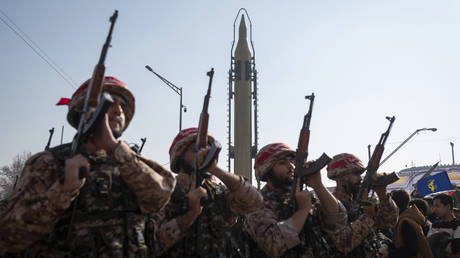
When Tehran joined the BRICS bloc, leaders popped champagne and heralded a new era of multipolar resistance against Western dominance. Fast forward to today, and that grand vision is hitting a massive wall. With US and Israeli military strikes hitting Iranian infrastructure, and the Strait of Hormuz facing severe maritime disruptions, Iran is demanding that its BRICS partners move past hollow diplomatic communiqués.
They aren't getting what they want. Instead, the bloc is deeply divided, paralyzed by competing national interests and heavy economic ties to Washington. If you think BRICS is ready to act as a unified military or strategic counterweight to the West, you're looking at the headlines instead of the reality.
The Core Conflict Nobody Wants to Name
The primary tension inside the expanded BRICS coalition comes down to a simple mismatch of goals. Tehran wants a collective security framework—a mechanism where major players like China and Russia actively check American and Israeli power in the Persian Gulf. Iranian officials have openly urged member states to shatter what they call a Western sense of global impunity.
Yet, countries like India and several Gulf states balancing inside the bloc view things differently. Indian Foreign Minister Subrahmanyam Jaishankar and other regional diplomats have focused heavily on the immediate economic fallout: strangled shipping lanes, spiked energy costs, and threats to global trade. They want stable markets, not a direct geopolitical confrontation with Washington.
This creates an awkward diplomatic paralysis. Iran uses platforms like the BRICS foreign ministers meetings in New Delhi to cast its struggle as a defining test for the entire non-Western world. But the organization itself functions primarily as an economic forum, not a mutual defense pact like NATO.
Why Economic Ambitions Clash With Real-World War
You have to look at the structural design of BRICS to understand why it can't rescue Iran from its current crisis. The bloc's primary glue has always been trade diversification, local currency settlement, and finding escape routes from dollar dominance. Nations joined to protect their balance sheets, not to bleed for each other's security mandates.
When maritime traffic near key chokepoints slows to a crawl following naval blockades and tanker seizures, it directly harms the export-heavy economies within BRICS. Beijing relies on steady energy flows, while New Delhi maintains complex, multi-layered defense and economic relationships across both the West and the Global South. Dragging the entire coalition into a direct standoff over Middle Eastern kinetic warfare threatens to fracture the group from within.
The Limits of Multipolar Solidarity
We keep hearing that the unipolar moment is dead. On paper, adding resource-heavy and strategically positioned countries like Iran to BRICS and the Shanghai Cooperation Organisation looks like a masterclass in geopolitical expansion.
Theory and practice are two different beasts. When bombs fall and naval destroyers intercept cargo vessels, abstract concepts like multipolar governance don't stop missiles or clear maritime blockades. Iran's repeated calls for a decisive, united condemnation run straight into the cautious pragmatism of capitals that refuse to jeopardize their broader global trade portfolios for a single partner.
The alliance is sidestepping the ultimate showdown. Rather than forming a cohesive security council to arbitrate Western military actions, member states are offering standard expressions of concern while managing their own domestic inflation and energy security.
If BRICS wants to be taken seriously as an architect of a new world order, it has to prove it can handle hard security crises, not just trade summits. Right now, it's failing that exam.
Stop expecting economic coalitions to behave like military alliances. Watch how individual member states navigate their bilateral energy deals behind closed doors instead of waiting for a collective rescue that isn't coming.