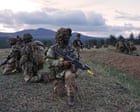
The British Army was forced to cancel a major September infantry deployment to Kenya after local officials refused to issue mandatory operational licences.
At first glance, it looks like a routine bureaucratic hiccup. The UK Ministry of Defence called the licence delays regrettable and pointed to administrative timing. But make no mistake: this isn't just paperwork sitting on a bureaucrat's desk in Nairobi. It's a full-blown diplomatic clash over legal sovereignty, host country payments, and accountability for foreign soldiers. Don't miss our recent article on this related article.
For decades, the British Army Training Unit Kenya—better known as BATUK—has operated across the rough terrain of the Laikipia plateau. Thousands of British infantrymen cycle through the region every year to prepare for deployments in harsh environments. Now, members of the 1st Battalion, Duke of Lancaster’s Regiment won't be heading to Nanyuki. They're heading somewhere else entirely.
The immediate trigger for the cancellation is Kenya's refusal to ratify a revised bilateral Defence Cooperation Agreement without significant concessions. Kenyan lawmakers want hard legal powers to try British military personnel in local courts when serious crimes occur on Kenyan soil. They want higher payments for hosting the base. And they're responding to a decade of rising public outrage over human rights complaints, environmental damage, and unpunished violence. If you want more about the history here, The Guardian provides an informative breakdown.
Here's the real story behind the standoff, why both sides are digging in their heels, and what this means for the future of British power projection in Africa.
The Real Sticking Point Is Jurisdiction
To understand why Kenya blocked the licences, you have to look at the primary jurisdiction debate inside the Defence Cooperation Agreement.
When foreign troops operate on foreign soil, both governments sign an agreement establishing who holds legal authority when a soldier breaks the law. Historically, Western militaries push hard for primary jurisdiction. They want their own martial courts and military law to apply to their troops, keeping them out of local legal systems.
Kenyan lawmakers have made it clear that those days are over.
The chair of Kenya's National Assembly committee on defence, Nelson Koech, confirmed that negotiations hit a wall over primary jurisdiction. Kenyan authorities want explicit legal mechanisms that let local prosecutors investigate, arrest, and try British personnel who commit civil offences off base.
London has historically resisted giving foreign courts jurisdiction over its military personnel, fearing unfair trials or political prosecutions. But Nairobi insists that any deal granting foreign troops access to Kenyan territory must respect Kenyan law. Without that guarantee, parliamentarians won't sign the licence renewals.
Money is another flashpoint. Kenya wants Britain to pay significantly more money to host the training facilities in Laikipia. British officials point out that BATUK pours millions into local businesses around Nanyuki through local employment, catering, equipment hire, and hospitality. Kenyan legislators argue that routine commercial spending doesn't replace fair state-level compensation for using public land.
A Shadow Cast by Twelve Years of Injustice
You can't discuss the current military standoff without talking about Agnes Wanjiru.
In 2012, 21-year-old Agnes Wanjiru was found dead in a septic tank behind a hotel in Nanyuki. She was last seen alive in the company of British soldiers from BATUK. For nearly a decade, the case went nowhere. Rumours swirled, internal military complaints were ignored, and local community anger simmered beneath the surface.
The case finally moved forward recently, resulting in murder charges against a British soldier, Robert Purkiss, who denies the charge. Kenya retained jurisdiction in the case, and an extradition hearing is scheduled for November.
The handling of Wanjiru's death became a symbol of systemic imbalance for the Kenyan public. It raised uncomfortable questions about whether foreign forces operate above the law inside a sovereign nation.
A parliamentary inquiry in Nairobi documented dozens of grievances from communities around Nanyuki. The complaints range from unexploded ordnance injuring local herdsmen to habitat degradation, traffic accidents, and allegations of sexual exploitation.
Kenyan politicians face intense pressure from voters who refuse to extend military privileges without strict accountability. In 2026, backing down on jurisdiction isn't politically viable for Nairobi.
What the British Army Loses Without Laikipia
Losing access to Kenya—even temporarily—is a serious blow to the Ministry of Defence.
Laikipia isn't just an empty field. It offers high altitude, extreme temperatures, thick brush, and sprawling spaces that simply don't exist anywhere in the United Kingdom or Europe. You can't replicate dry-heat endurance drills or large-scale live-fire infantry manoeuvres on Salisbury Plain.
BATUK is Britain's biggest permanent training hub in Africa. It provides realistic infantry training for battalions preparing for global rapid-reaction roles. Moving a scheduled deployment like the 1st Battalion, Duke of Lancaster’s Regiment on short notice creates operational headaches. Finding alternative locations in Oman, Belize, or Europe requires fresh logistics, transport contracts, and international clearances.
It costs more money. It strains troop readiness timelines. And it shows that Britain's military footprint abroad is increasingly contingent on diplomatic goodwill rather than long-standing habit.
The Economic Blow to Nanyuki and Laikipia
While Kenyan politicians hold the line in parliament, local business owners in Nanyuki are bracing for impact.
The financial ecosystem around the base relies on the regular rotation of British troops. When a battalion lands for an exercise, local hotels fill up. Logistics firms get contracts for transport, fuel, and supplies. Hundreds of local residents work directly as support staff, drivers, range wardens, and mechanics.
A single cancelled exercise translates to millions of Kenyan shillings pulled out of the regional economy overnight.
Local suppliers can't easily replace that revenue. BATUK also funds community development programs, medical outreach clinics, and environmental initiatives in surrounding counties. If the impasse drags on, those social initiatives stall alongside military exercises.
The economic damage puts President William Ruto's government in a tricky spot. Ministers must balance local economic livelihoods against national pride and legal sovereignty.
The Changing Post-Colonial Security Relationship
This standoff reflects a much wider shift in African defense alliances.
Governments across the continent are asserting greater control over foreign military presences. Western nations can no longer assume that post-colonial military agreements will automatically renew without friction.
Kenya values its defense partnership with the UK, especially for counterterrorism intelligence and joint border security operations. But Nairobi knows its strategic leverage. The UK needs unique training ground terrain just as much as Kenya benefits from military aid.
By withholding training licences, Kenya sends a clear signal to London: renegotiate terms as equal partners or find somewhere else to train.
What Happens Next
The current cancellation affects the immediate September exercise, but it doesn't mean BATUK is shutting down permanently. Both countries emphasize that diplomatic talks continue behind closed doors.
British High Commissioner Matt Baugh recently held direct talks with President William Ruto at State House in Nairobi. While neither side publicly confirmed the exact progress on licensing, high-level diplomatic involvement shows that both capitals want a resolution before the November extradition proceedings begin.
For Britain to resume training exercises in Laikipia, expect to see compromise in three key areas:
First, legal guarantees that give Kenyan courts primary jurisdiction over severe off-duty crimes committed outside military boundaries.
Second, an upgraded financial package that directs more money into community infrastructure and environmental remediation around training areas.
Third, a joint oversight panel with real authority to investigate community complaints, traffic incidents, and unexploded ordnance reports.
If the UK Ministry of Defence accepts those terms, BATUK will resume operations with a new set of rules. If London refuses to yield on legal jurisdiction, Britain will have to search for a new long-term home for its heavy infantry exercises elsewhere in the world.