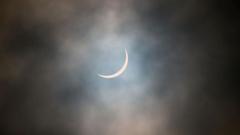
If you think you need to fly to Spain or Iceland to catch the cosmic spectacle on August 12, 2026, think again. Scotland is primed for one of the most striking astronomical shows of the decade. Sure, we miss out on total totality—that absolute daytime darkness reserved for lucky observers further south in Europe—but what we get is nothing to sneeze at.
Over 90 percent of the Sun will be covered by the Moon right here. It’s the deepest partial solar eclipse visible in these parts since the famous 1999 event, and it happens just as the evening settles.
Here is everything you actually need to know about tracking down the solar eclipse in Scotland, timing your evening, and picking a horizon that won't ruin the view.
The Exact Timeline You Need to Know
Timing is everything for this event because it happens low in the western sky just before sunset. You cannot afford to show up late.
The partial eclipse kicks off across mainland Scotland right around 6:08 PM BST. Over the next hour, the Moon takes a massive, visible bite out of the solar disc.
Maximum eclipse—the peak moment when the Sun is at its most hidden—hits between 7:05 PM and 7:06 PM BST, depending on whether you are standing in Edinburgh or Glasgow.
The whole event wraps up right around 8:00 PM BST as the Sun dips low toward the horizon.
Where to Stand in Scotland for the Best View
Because the eclipse takes place so late in the day, your elevation and your western horizon matter more than anything else. If there's a hill, a clump of mature trees, or a block of flats directly west of you at 7:00 PM, you will miss the climax entirely.
Glasgow and the Central Belt
If you are watching from Glasgow, you will experience roughly 91.4 percent solar obscuration. Urban stargazing can be tricky due to buildings, so you want to get high. Parks with open western skies or elevated urban points work best. The Glasgow Necropolis offers sweeping views if open, but local parks with a clear slope facing west will give you a safer bet.
Edinburgh and the East
Edinburgh viewers will see about 90.7 percent of the Sun covered. Skip the narrow closes of the Old Town. Head straight for Arthur’s Seat or the Salisbury Crags. These spots provide immediate elevation and an expansive, unobstructed look right across the city toward the western horizon.
The Highlands and the West Coast
If you want the ultimate atmospheric backdrop, head toward the west coast or the Hebrides. Locations like Machrihanish or open coastal stretches in Argyll give you that raw, ocean-facing horizon. Just keep a close eye on the local weather; western Scotland deals with changeable maritime fronts, so mobility is your best friend if clouds roll in.
The Biggest Mistakes People Make
Most casual observers screw up two major things during a partial eclipse: safety and horizon planning.
First, do not throw away your certified solar eclipse glasses just because 90 percent of the Sun is covered. Staring at a 90 percent eclipsed Sun will still fry your retina just as fast as a normal one. Keep your ISO-certified glasses on for the entire duration of the event.
Second, remember that after the peak at 7:05 PM, the Sun is plunging downward fast. People often pick a gorgeous spot during the afternoon, only to realize that a line of distant woodland swallows the Sun twenty minutes before maximum coverage. Check your chosen spot beforehand at 7:00 PM on a clear evening to see where the Sun actually sits.
Pack your gear, secure your glasses early, and keep an eye on the forecast. This is your best local chance at a celestial show for years to come.