The maritime industry just hit a wall. For years, the Suez Canal was the gold standard—a reliable, predictable, and relatively inexpensive artery for global trade. But as of August 2026, that certainty is dead. The Middle East remains a volatile flashpoint, and the Red Sea is effectively a no-go zone for many vessels.
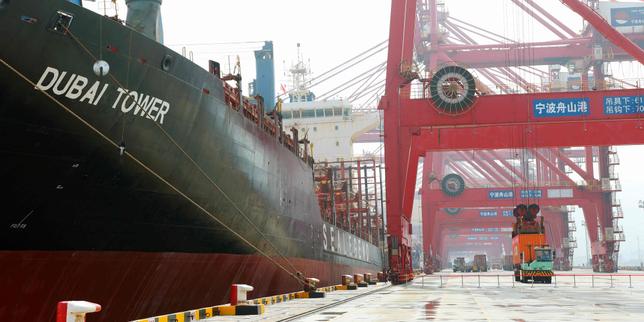
Enter the Dubai Tower.
This container ship, operated by Sea Legend, didn't head south toward the Indian Ocean. Instead, it pulled out of the Ningbo-Zhoushan Port in China and turned toward the Bering Strait. It’s the first vessel in what China hopes will be a consistent, weekly Arctic service to Europe. It’s an aggressive play, a high-stakes bet on a warming world, and a blatant move to bypass the chaos defining international shipping.
The math behind the Arctic shortcut
Why take a route that’s historically been a frozen death trap? Simple: speed and survival.
The traditional path from China to Europe takes roughly 40 days. It’s long, expensive, and currently subject to severe geopolitical risk. By cutting through the Northern Sea Route (NSR) along Russia’s northern coast, the journey drops to about 20 days. You’re effectively halving the transit time.
For retailers in Europe bracing for the holiday rush, this isn't just about saving fuel. It’s about predictability. If you’re a manufacturer in Ningbo or Yiwu, having your inventory sitting in a container off the coast of Yemen is a nightmare. This new Arctic express—scheduled to run until October—offers a "green channel" for high-value goods like power batteries, photovoltaic modules, and energy storage systems.
The hidden risks of the Polar Silk Road
Beijing calls this the "Polar Silk Road." It sounds grand, but the logistics are a headache.
The Arctic isn’t a highway. It’s a seasonal window. This service only works because the summer melt has reached a point where vessels can traverse the region without constant, crushing reliance on heavy-duty icebreakers. But that window is narrow—July to October, at best.
Beyond the obvious environmental backlash—which is significant—there’s a technical reality that many observers miss. These ships aren't just sailing through open water. Navigating the NSR requires specific hull strengthening, specialized insurance, and crews capable of handling extreme, isolated conditions.
Major Western players like CMA CGM and Hapag-Lloyd have publicly sworn off Arctic shipping. They cite ecological preservation and the sheer unpredictability of the environment. China, meanwhile, sees a strategic opening. By investing in this route, they’re not just moving cargo; they’re establishing a presence in a region where they have no coastline. They’re signaling that the old rules of maritime transit no longer apply if they don't serve the bottom line.
Why this isn't just a one-off stunt
You might think, "It's just one ship." But look closer. Sea Legend isn't testing the waters with a single vessel. They have a fleet rotation planned. We’re talking about seven to eight ice-strengthened ships rotating through this route. They’ve even secured agreements with European terminals for priority berthing. This is a coordinated supply chain, not a PR experiment.
The growth is already visible in the data. In 2024, 15 container ships braved the Northern Sea Route. In 2025, that jumped to 23. This year, with the launch of a scheduled weekly service, that number is poised to climb again.
Realities for global trade
If you're in the import-export business, you need to understand what this means for your margins.
- Inventory velocity: A 20-day transit means you can turn over your working capital twice as fast compared to the Suez route.
- Geopolitical hedging: Relying on the Suez Canal is currently a single point of failure. Diversifying your shipping lanes, even if they come with higher insurance premiums or seasonal limitations, is starting to look like a rational business decision rather than a radical one.
- Regulatory hurdles: Expect the environmental debate to heat up. If your brand relies on a "green" image, using a route that’s criticized for accelerating polar ice melt could become a PR liability.
The Arctic is changing. Businesses are responding. What we’re seeing right now isn't the future of shipping; it's the desperate adaptation to a fragmented, hostile, and rapidly warming world. Don't expect things to go back to the way they were before the Red Sea became a battleground. This is the new normal. Adapt or get left behind in the queue.