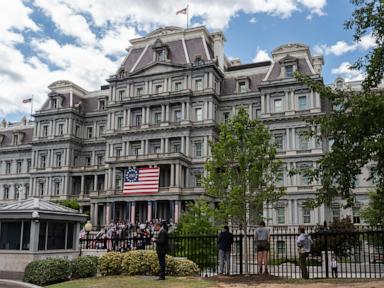
A federal judge just greenlit initial paint tests on the Eisenhower Executive Office Building. For now, the administration’s $7.5 million plan to turn the iconic granite structure white moves forward. But don't mistake this procedural win for a total victory. The real fight isn't about paint; it’s about who actually gets to decide the fate of our historic federal landmarks.
The core of the conflict
If you’ve been following this, you know it sounds like a simple dispute over aesthetics. The President wants the Eisenhower Building—that sprawling, 19th-century granite landmark right next to the White House—to be painted white. His team calls it "beautification." Preservationists and historians call it a disaster.
They argue that painting porous, historic granite is a recipe for long-term ruin. The paint traps moisture, which leads to freezing, thawing, and eventually, the stone spalling or crumbling away. It’s a classic case of short-term cosmetic fixes causing permanent structural damage.
But the legal battle is much uglier than the potential paint job.
Why this case is a massive legal precedent
The plaintiffs—including groups like Cultural Heritage Partners—aren't just fighting over a paintbrush. They are fighting the government’s assertion that the White House Office of Administration can sidestep federal environmental and preservation laws.
Usually, the General Services Administration (GSA) handles these kinds of projects. The GSA is bound by the National Historic Preservation Act (NHPA) and the National Environmental Policy Act (NEPA). These laws exist to make sure we don't accidentally destroy our own history during "renovations."
The administration’s legal team is essentially arguing that since this project is being handled by the Executive Office of the President, they aren't subject to those same rules. If the courts eventually agree with them, it would essentially open a massive loophole. Any future administration could potentially bypass standard oversight for any property, as long as they bring the project "in-house."
The judge's ruling explained
U.S. District Judge Dabney L. Friedrich’s recent decision to allow the tests is narrow. She found that the plaintiffs didn't prove these specific, small-scale tests—which cover about 8 square feet of exterior stone and a few hidden panels—would cause "irreparable harm."
In legal terms, "irreparable harm" is a high bar. You have to prove that once the action is taken, there’s no way to fix it. The judge decided that, at this scale, the risk isn't enough to trigger an emergency injunction.
However, the judge was clear: this isn't a blank check. She warned the administration she wouldn't hesitate to step in if they move beyond limited testing. She’s demanding regular status reports. She’s keeping a tight leash on the proceedings.
What happens next
If you are wondering what happens to the building now, the answer is "wait and see." The legal battle over the project's authority is still very much alive.
- Status reports: The judge has ordered the parties to file regular updates. This keeps the administration’s feet to the fire.
- The larger question: The court still needs to decide if the White House can legally bypass the GSA and ignore federal preservation laws. That is the true "make-or-break" moment for this project.
- Technical studies: The tests will likely involve applying and then attempting to remove mineral silicate paint. Scientists will be watching to see if the stone suffers.
A warning for future projects
This case should matter to anyone who cares about how we treat our history. If we allow the Executive Branch to exempt itself from the laws that govern everyone else, we lose the ability to protect buildings that belong to the public.
Don't buy into the idea that this is just about whether a building looks "better" in white. This is about power, accountability, and whether federal law is actually universal. Keep an eye on those status reports. If the government starts expanding their testing without a court order, the situation could shift from a legal dispute to a genuine crisis for the landmark.
For now, the paint tests start. The real test of our legal system, however, is just beginning.