A technical failure in New Jersey just gave Capitol Hill its biggest election argument in years.
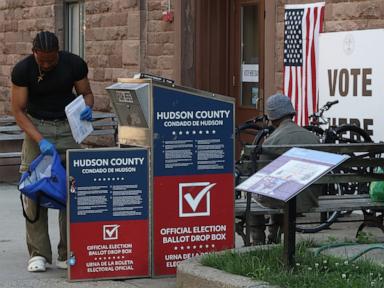
When New Jersey Governor Mikie Sherrill revealed that a software bug in state motor vehicle offices accidentally placed roughly 6,600 non-citizens on voter rolls between June 2023 and June 2024, the fallout was instantaneous. About 400 of those individuals actually cast ballots in subsequent elections. That single admission handed House Republicans the exact real-world proof point they wanted as they scramble to pass the SAVE America Act ahead of Congress' late-summer recess.
If you've been following the national debate over election administration, you know how hard it usually is to find concrete instances of non-citizen voter registration. Most claims rely on statistical extrapolation or isolated errors. New Jersey changed that overnight.
Yet the political battle taking place in Washington right now misses the actual lesson of what happened in Trenton. This wasn't a coordinated conspiracy to skew an election, nor was it an imaginary problem dreamed up for talk radio. It was a mundane, systemic software failure that hid in plain sight for three years because nobody audited the underlying code.
Here is what really went wrong, how lawmakers are using it to push nationwide election changes, and what this fight means for voters before the upcoming midterms.
How a Single DMV Code Error Created 6,600 Unqualified Voters
The problem started inside New Jersey's Motor Vehicle Commission (MVC). Under "motor-voter" laws designed to make voter registration easier, DMV electronic pin pads prompt residents to register when applying for or renewing a driver's license.
Between mid-2023 and mid-2024, the state's external technology vendor, Idemia, rolled out a software update. That update contained a flaw. Even when individuals checked boxes self-identifying as non-citizens, the software pushed their contact information into the election database anyway.
The system was supposed to filter out non-citizens automatically. It didn't.
MVC Application Screen -> Applicant flags "Non-Citizen" status
                          |
                  [Idemia Software Flaw]
                          |
                          v
         Transmitted to Division of Elections
                          |
                          v
       Added to Active Voter Rolls (6,600 people)
                          |
                          v
        400 Ballots Cast Across Multiple Cycles
State officials fixed the software gap in 2024 during former Governor Phil Murphy's administration. However, the state kept quiet about the error for two years while working through internal checks.
When Governor Mikie Sherrill took office in early 2026, her administration uncovered the full scope and made it public. She immediately launched an investigation through outside legal counsel CSG Law and announced plans to replace Idemia with Talus Software.
The numbers are important to keep in perspective. About 400 ballots cast out of millions of votes cast in New Jersey represents roughly 0.009% of the electorate. Non-partisan election experts like David Becker, director of the Center for Election Innovation & Research, pointed out that 400 votes were not enough to alter the outcome of any statewide election.
That detail didn't slow down the political momentum in Washington.
Capitol Hill Escalates the Fight Before August Recess
Within hours of Sherrill's press conference, Republican leaders in the U.S. House of Representatives brought the issue directly to the floor.
House Majority Leader Steve Scalise, Louisiana Republican, held up news reports during floor debate to argue that state-level motor-voter systems are fundamentally vulnerable to non-citizen registration. Wisconsin Representative Bryan Steil and New Jersey Representative Chris Smith pushed hard for immediate action.
The central vehicle for their push is the Safeguard American Voter Eligibility (SAVE) America Act.
The SAVE Act would make sweeping changes to how Americans register to vote in federal elections. Its core provisions include:
- Requiring physical proof of U.S. citizenship (such as a U.S. passport, birth certificate, or naturalization papers) to register for federal races.
- Mandating photo identification for all in-person federal voting.
- Restricting mail-in voting rules and eliminating college student IDs as valid voter registration proof.
- Directing states to cross-reference their voter rolls with Homeland Security and Social Security databases on a regular basis.
GOP lawmakers see the New Jersey admission as proof that voluntary self-attestation on DMV forms isn't enough. If a state's software fails, self-attestation gets bypassed.
Opponents of the SAVE Act, including most House Democrats, argue that requiring physical citizenship documents creates massive administrative hurdles for legal voters. Millions of American citizens don't have immediate access to a birth certificate or passport, especially lower-income individuals or married women whose legal names differ from their birth certificates.
Democratic Representative Josh Gottheimer took a different angle, asking federal agencies to audit Idemia's broader technology contracts with federal agencies like the FBI and Department of Homeland Security rather than overhauling voter rules.
Why the Vendor Problem Matters More Than the Politics
If you look past the partisan shouting on C-SPAN, the real story here is about government procurement and tech oversight.
Idemia is a massive government contractor, providing identity systems for over 600 government agencies worldwide. Yet, when the New Jersey failure came to light, a classic pointing finger contest began.
Idemia issued statements claiming its systems merely collect raw data and pass it along, leaving the ultimate responsibility of voter qualification checks to the state Division of Elections. Meanwhile, state officials pointed out that when a vendor's interface fails to flag non-citizen responses, administrative databases get poisoned at the source.
This dynamic happens constantly across municipal and state tech infrastructure:
- States outsource identity software to third-party vendors.
- Updates get deployed with insufficient stress testing on edge-case data entries.
- Public agencies lack internal engineering teams capable of performing routine code audits.
- Glitches persist for months or years without detection.
Whether or not Congress passes the SAVE Act before recess, state election directors across the country now face a clear warning. If state systems rely on automated registration tools, the underlying vendor code must undergo strict independent security checks.
What This Means for Voters Moving Forward
This political fight will intensify heading into the midterms. You can expect to hear New Jersey mentioned in almost every debate over voter identification and registration rules.
If you want to ensure your own registration is secure and unaffected by state software updates, here are three steps to take right away:
- Check your voter status directly through your state's official secretary of state or division of elections portal. Don't rely solely on automated DMV updates.
- Verify that your full legal name and address match your driver's license and official identification documents exactly.
- If you have moved recently or updated your license at a local DMV, log into your state's voter registry 30 days later to confirm the update processed correctly.
Congress will continue to debate federal mandates right up until the August break. But at the state level, the work of auditing systems, replacing faulty software, and ensuring clean voter lists is already underway.