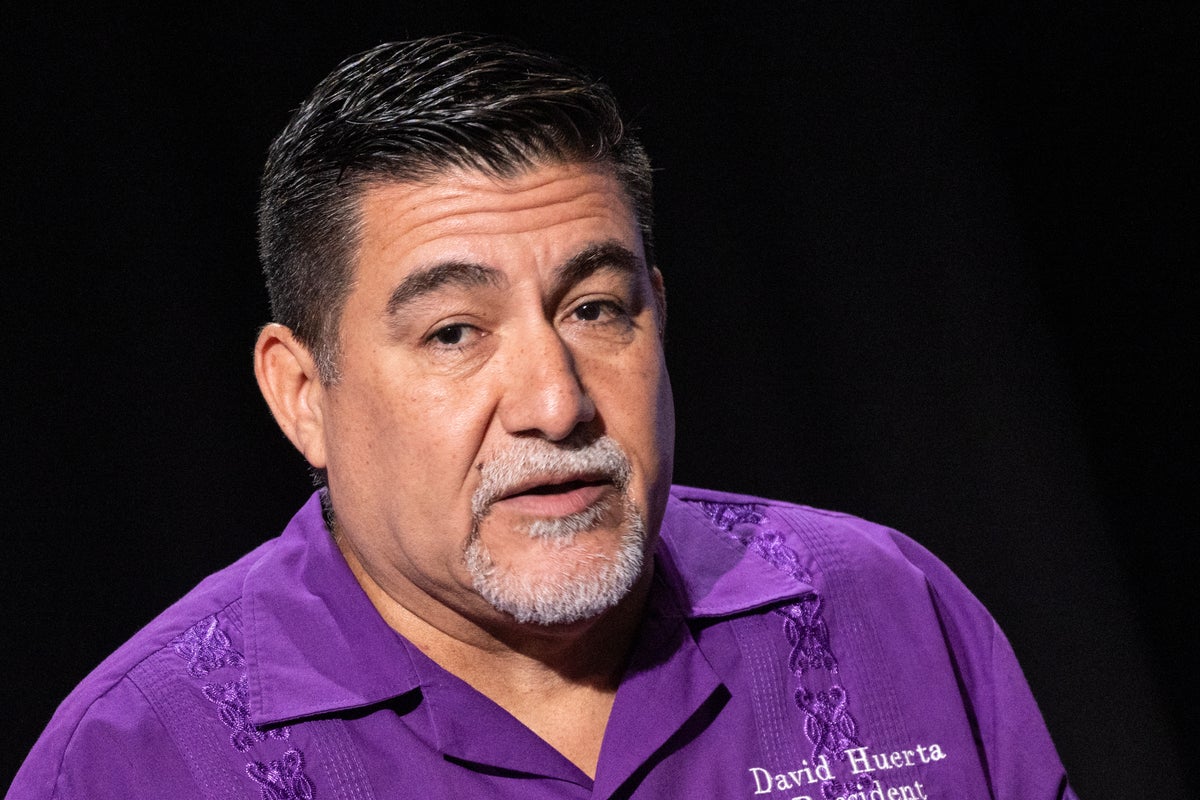
Federal prosecutors just blinked. The Department of Justice filed a motion to officially dismiss the remaining misdemeanor charge against prominent California labor leader David Huerta, drawing a quiet curtain over a high-profile prosecution that has been crumbling for months.
If you've been following the clash between labor organizations and federal immigration sweeps in Southern California, this outcome feels less like a surprise and more like an inevitable retreat. Huerta, who leads the Service Employees International Union California, spent over a year fighting a legal battle that started with a chaotic arrest during a June 2025 ICE operation at a garment district warehouse in downtown Los Angeles.
What started as high-stakes political theater with felony charges has now evaporated into a conditional diversion agreement. Here is what actually happened, why the case fell apart, and what it means for future protests.
From Felony Threats to Quiet Dismissals
The story goes back to June 6, 2025. Federal agents descended on Ambiance Apparel in downtown Los Angeles to execute a search warrant. Huerta showed up to protest the operation, joining crowds outside the facility.
Things escalated quickly. Federal agents tackled, pepper-sprayed, and detained Huerta, claiming he blocked a gate and prevented law enforcement vehicles from moving. The initial reaction from the government was aggressive. Prosecutors hit him with a heavy felony charge: conspiracy to impede an officer.
At the time, federal officials wanted to send a message. Top prosecutors framed the arrest as a zero-tolerance warning that standing in the way of federal agents would land you behind bars for years. But grand standing in press conferences doesn't always translate to winning in a courtroom.
By late 2025, the government quietly downgraded the felony count to a misdemeanor charge of obstructing, resisting, or opposing a federal officer. Now, the U.S. Attorney's Office in Los Angeles has agreed to scrap even that lesser charge entirely, provided Huerta stays out of trouble through August.
Why the Government's Case Collapsed
You have to look at the broader pattern to understand why the DOJ walked away. This wasn't an isolated incident. Across the country, federal prosecutors have struggled to secure convictions in cases where demonstrators were accused of assaulting or hindering immigration officers during recent crackdowns.
When video footage of Huerta's arrest surfaced, it undermined the narrative presented in the original complaint. Defense attorneys Abbe Lowell and Marilyn Bednarski pushed back hard, arguing that the entire prosecution was a retaliatory effort designed to silence critics of administration policy.
As the case dragged on, the legal foundation eroded under judicial scrutiny. Rather than risk a humiliating trial loss—a fate that has plagued several similar federal dockets—prosecutors opted for a pretrial diversion route. Under the terms filed in Los Angeles, the case will be fully dismissed with prejudice by the end of August, meaning the government cannot bring these charges back.
The Battle Lines Over Free Speech
The fallout from this case highlights a deep tension between federal enforcement priorities and First Amendment protections.
- The Government's Stance: Federal spokespeople maintain that agents didn't arrest Huerta for peaceful assembly, but rather for actively interfering with the execution of a lawful judicial search warrant.
- The Defense's Stance: Huerta and his legal team view the entire ordeal as an abuse of prosecutorial power intended to intimidate labor organizers and immigrant advocates.
In his public statements following the DOJ's motion, Huerta didn't mince words. He called the original charges baseless and a direct attempt to punish him for speaking out. For union members and civil rights advocates representing hundreds of thousands of workers across California, the dismissal stands as a vindication of their right to monitor and criticize law enforcement actions.
What Happens Next
The legal chapter for David Huerta is drawing to a close, but the political friction surrounding immigration enforcement in urban centers remains as intense as ever. If you are tracking how federal authorities handle protest movements, keep an eye on similar dockets nationwide. When the government overreaches with high-level conspiracy charges that cannot survive video evidence or courtroom discovery, expect more of these cases to quietly unravel before they ever see a jury.