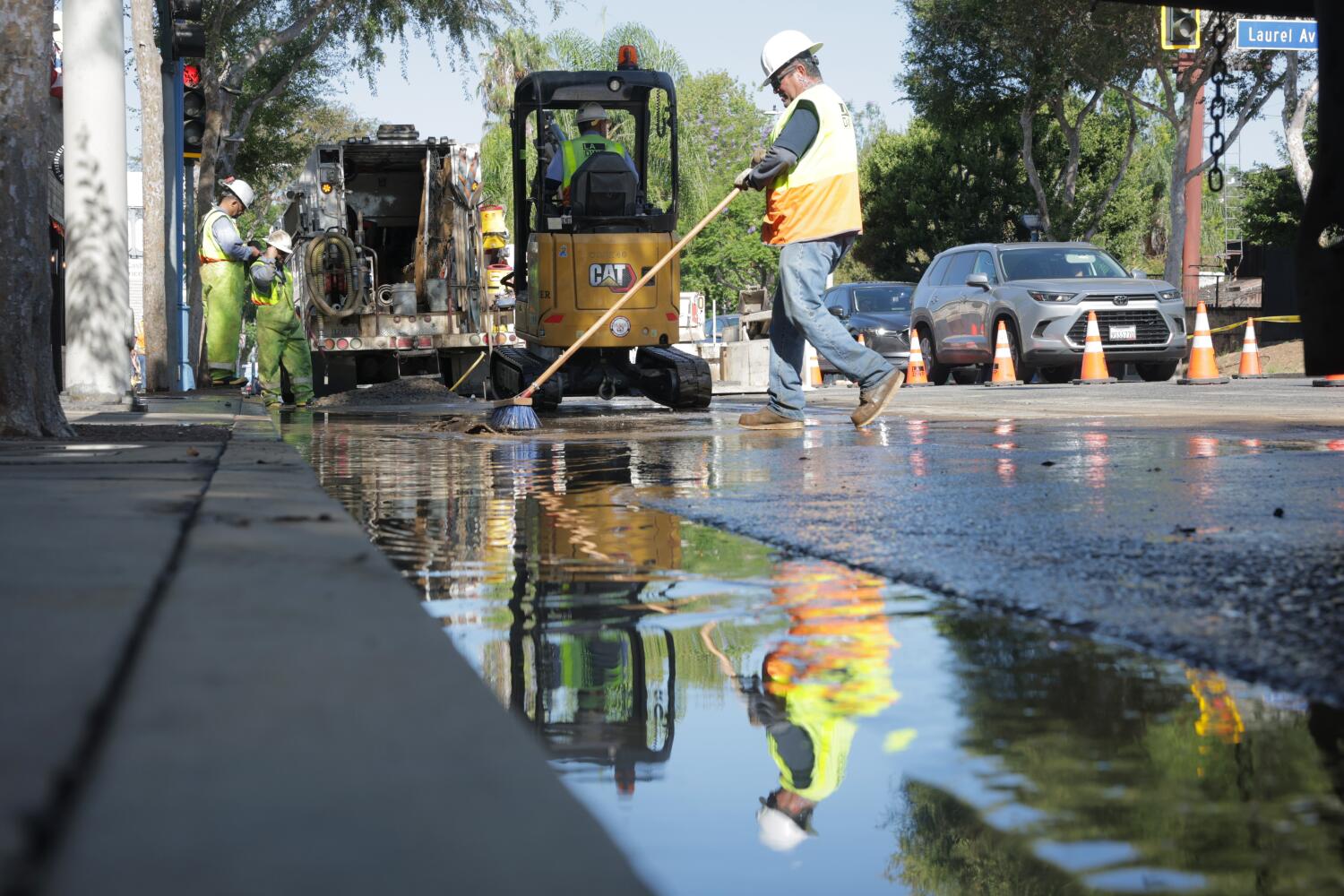
If you woke up on July 16, 2026, anywhere near West Hollywood, you likely saw the wild footage. A 36-inch cast-iron trunk line beneath Sunset Boulevard and Holloway Drive ruptured around 4:00 AM, unloading roughly 17 million gallons of water into the streets. Cars floated like toys down the asphalt, subterranean garages filled to the ceiling, local spots like Dialog Cafe took major flood damage, and a massive sinkhole swallowed a chunk of one of LA's most iconic corridors.
Naturally, the immediate public reaction was simple: dig it up, patch the pipe, slap down some asphalt, and get traffic moving.
Yet, over a week later, Angelenos are still asking why the heavily traveled stretch between Sherbourne Drive and San Vicente Boulevard remained closed heading into Friday night. The Los Angeles Department of Water and Power (LADWP) targeted a late Friday reopening, but only after facing delays caused by a persistent pinhole leak discovered mid-week.
Fixing century-old city plumbing isn't as simple as turning off a garden hose. The delay on Sunset Boulevard highlights the messy, hidden reality of updating urban water infrastructure across major American cities.
The Engineering Reality Behind Patching a Modern Water Crisis
When a 110-year-old pipe built in 1916 blows out, you can't just drop in a quick replacement piece and turn the valve back on high. Modern municipal water systems operate under massive pressure, and rushing the process guarantees a second disaster.
Here is what actually happens beneath the pavement before a road can reopen safely:
- Excavation and Structural Stabilization: Water at that volume erodes the earth underneath the street. Before engineers can even touch the pipe, they have to shore up the surrounding soil so heavy machinery doesn't collapse the trench.
- Precision Welding and Sleeve Fitting: LADWP crews replaced a 25-foot section of the damaged steel transmission main. Every single joint requires high-grade industrial welding.
- Gradual Repressurization: You can't blast water back through a newly repaired trunk line. Water pressure has to be brought up incrementally over many hours. If you pressurize too fast, shockwaves—known as water hammer—will pop another weak seam further down the line.
- Secondary Leak Auditing: This exact step caught LADWP crews off guard on Wednesday night. While backfilling the trench, workers spotted water seeping up at the eastern edge of the site. It turned out to be a pinhole leak on the secondary line, forcing crew members to re-excavate a 3x4-foot pocket, re-weld, and start the pressurization process all over again.
- Disinfection and Testing: Before a drop reaches home taps, the repaired line gets treated with high-concentration chlorine and thoroughly flushed. Water quality testing must meet strict health standards before the valve opens fully.
Shortcuts in any of these steps risk contaminating the local drinking supply or triggering another blowout under a newly paved road.
Why Patching Sunset Boulevard Is Only a Temporary Fix
Even when barricades come down and cars start rolling across Sunset Boulevard again, the fix isn't finished.
The repaving happening on Friday is purely temporary asphalt designed to restore traffic flow over the weekend. LADWP already confirmed that crews will have to return in the coming weeks to pour permanent asphalt, rebuild damaged concrete bus pads, and repair crushed sidewalks.
More importantly, patching this single break doesn't solve the underlying problem. The 10-mile transmission line running beneath Sunset Boulevard was already slated for a total replacement project long before this rupture occurred. The pipe simply reached the end of its lifespan before the city could replace it.
LADWP currently manages a system where the target replacement cycle for distribution mainlines is 150 years. While their overall leak rate remains roughly 36% lower than the national average, moments like this show the extreme risk of relying on infrastructure installed during Woodrow Wilson's presidency.
Sunset Pipeline Timeline (July 2026)
-----------------------------------------------------------------------------------
July 16      Rupture occurs; ~17 million gallons lost; major sinkhole forms.
July 17-21   25-foot pipe section replaced; initial welding and backfilling.
July 22      Water seeping detected at night; pinhole leak identified.
July 23      Crews re-excavate 3x4ft area; pinhole repaired; repressurization resets.
July 24      Water quality testing, temporary repaving, and target Friday late-night reopening.
-----------------------------------------------------------------------------------
The High Cost of Interrupted Commerce
While engineers deal with soil mechanics and pressure gauges, local businesses face a completely different crisis.
When a main vein like Sunset Boulevard shuts down for more than a week, surrounding foot traffic dies instantly. Small businesses off the main strip—already dealing with high Los Angeles overhead—face severe revenue losses. Soft closures at San Vicente and hard closures at Horn Avenue forced delivery drivers, commuters, and tourists to detour completely around the heart of West Hollywood.
Property owners with flooded underground garages are sorting out massive insurance claims for destroyed vehicles and structural damage. Meanwhile, affected commercial tenants must navigate business interruption policies that rarely pay out instantly.
LADWP maintains an online claims portal for affected property owners, but full financial recovery for these businesses will take far longer than the time it takes to lay down a patch of temporary asphalt.
How to Protect Your Property and Navigate Commute Delays
If you live, commute, or run a business in an area dealing with major utility repairs, standing around waiting for updates won't help you. Taking a few proactive steps can save you thousands in headaches:
- Document Damage Instantly: If water or mud touched your property during the initial breach, photograph every inch before cleanup crews haul materials away. File both a private insurance claim and a public claim through the city's utility portal (LADWP.com/Claims for LA residents) immediately.
- Monitor Water Clarity: When major transmission mains are repressurized, sediment inside adjoining pipes gets kicked up. If your tap water looks brown or cloudy, run your cold water taps at the lowest level of your home for two to three minutes until it runs clear. Do not use hot water until it clears, or you'll pull sediment into your water heater.
- Bypass the Closure Zone Entirely: Even when Sunset reopens late Friday, expect heavy residual congestion and eventual lane restrictions when crews return for permanent repaving. Use Santa Monica Boulevard or Hollywood Boulevard as your primary east-west pass-throughs until full construction concludes.