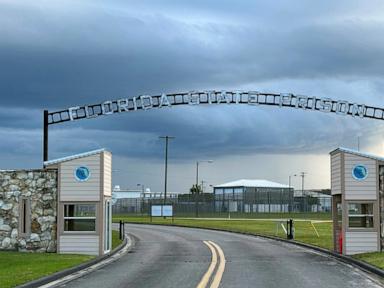
Capital punishment in America has always moved at a glacial pace, but Florida is currently rewriting that timeline. When death row inmates age into their seventies and eighties before facing execution, the entire premise of retributive justice shifts. You are looking at a system where decades of appeals, legal gridlock, and shifting political will collide with biological reality.
The state recently put to death a series of elderly men, culminating in cases involving octogenarians like Dominick Anthony Occhicone. Occhicone, convicted for a 1986 double murder, became only the second octogenarian executed in modern U.S. history, following Walter Moody Jr. in Alabama back in 2018. When a man spends nearly forty years behind bars before a lethal injection finally gets scheduled, the person strapped to the gurney bears almost no physical resemblance to the individual who committed the crime.
The Graying of America's Death Rows
Most people assume death row consists of hardened young offenders or middle-aged convicts. The data tells a completely different story. Decades of mandatory appellate reviews, federal habeas corpus petitions, and changing Supreme Court precedents mean that prisoners languish for generations.
Florida has turned into the nation's busiest execution chamber under Governor Ron DeSantis, accelerating timelines that previously sat dormant. But this speed brings a grim logistical hurdle: the inmates are simply getting old.
Consider the sequence of events leading up to this point:
- Dusty Ray Spencer was executed at age 74, briefly holding the record for Florida's oldest modern execution.
- Dennis Sochor was executed shortly after at age 74.
- Dominick Anthony Occhicone faced execution at age 80.
When you execute men in this age bracket, legal arguments inevitably pivot away from standard innocence claims and toward the Eighth Amendment. Attorneys routinely argue that advanced age, combined with severe medical issues like kidney failure, prostate disease, or liver complications, makes lethal injection dangerously unpredictable. They argue that frail bodies process execution drugs differently, raising the specter of cruel and unusual punishment. Courts, however, almost always reject these claims, maintaining that constitutional protections don't exempt someone from execution simply because they managed to survive four decades of appeals.
The Clash Between Closure and Chronology
Victims' families experience this delay in deeply personal ways. For relatives like Marilyn Gifford—whose sister Patricia was murdered decades ago—seeing a death warrant executed brings a bitter kind of finality, even if it arrives decades late. The argument from prosecutors has always been straightforward: murder has no expiration date, and justice delayed shouldn't mean justice denied.
On the flip side, human rights advocates and defense attorneys point out the absurdity of executing frail, geriatric men. By the time an inmate reaches 80 years old, deterrence is entirely meaningless. Public safety is already guaranteed by maximum-security confinement. What remains is pure state-sponsored retribution at a point where natural causes might claim the individual within months anyway.
This reality forces a hard question about modern jurisprudence. If a state requires forty years of legal filtering to ensure a death sentence is technically correct, the punishment morphs into something entirely different from what the original trial jury envisioned.
Check out this 74-year-old man becomes oldest inmate executed in modern Florida history video to understand the background of Florida's escalating executions of aging inmates.
http://googleusercontent.com/youtube_content/1