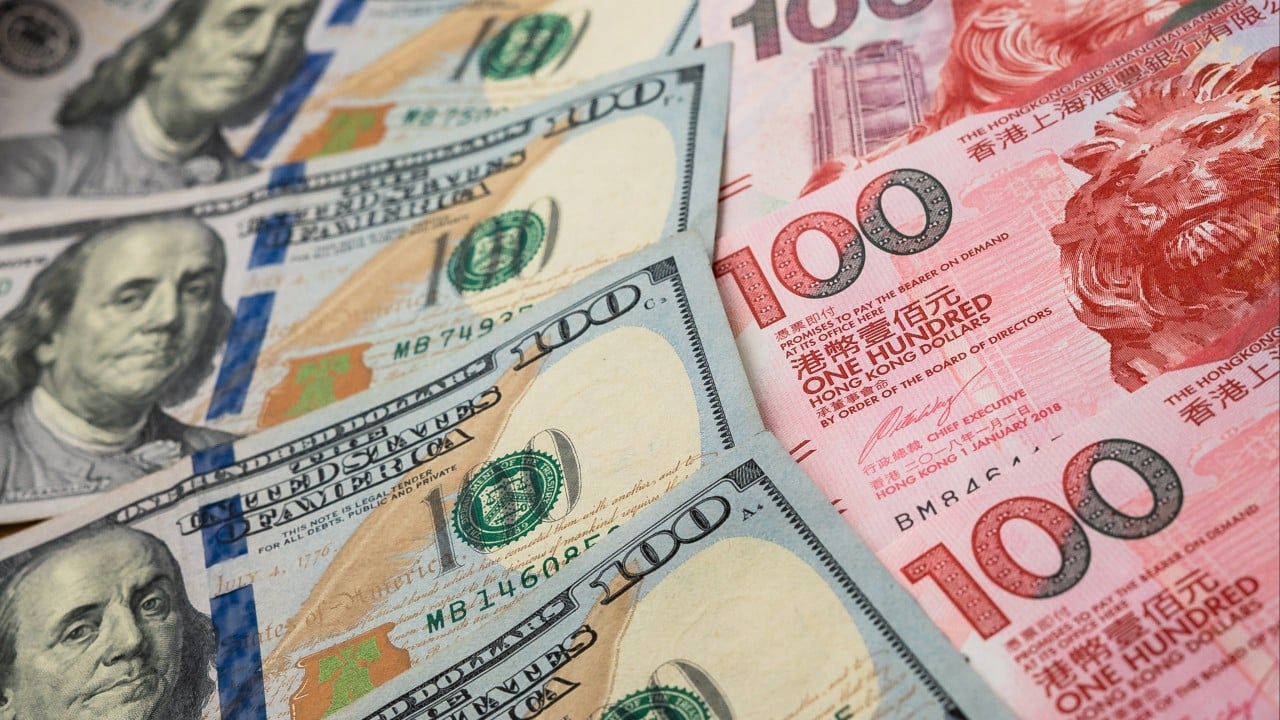
Every few years, market skeptics crawl out of the woodwork to declare that Hong Kong's currency peg is on its last legs. They point to shifting global superpowers, trade policy turbulence, and interest rate gaps, arguing that tying the local currency strictly to the US dollar is an outdated relic. But reality keeps proving them wrong. If you look past the sensational headlines, you'll see a rigidly defended mechanism backed by massive financial buffers.
Let's look at why this system triggers endless debate and why dismantling it remains a distant prospect.
The Core Mechanics of the Linked Exchange Rate System
Hong Kong has operated its Linked Exchange Rate System (LERS) since 1983. Under this framework, the Hong Kong dollar (HKD) stays anchored within a tight trading band between 7.75 and 7.85 against the US dollar.
When capital rushes in and the currency hits the strong-side limit of 7.75, the Hong Kong Monetary Authority steps in. It sells local currency and injects liquidity. When capital flees and pushes the currency toward the weak-side limit of 7.85, the authority buys back the local currency, shrinking the aggregate balance and driving up local interest rates.
You don't get to choose an independent monetary path under this setup. Hong Kong basically imports US monetary policy wholesale. When the Federal Reserve cuts or hikes rates, local borrowers and savers feel the ripple effects immediately.
Why Critics Are Knocking on the Door Again
Recent market turbulence has reignited fierce discussions about whether a review is overdue. Global trade tensions and fluctuating interest rate cycles have tested liquidity pools in ways not seen in decades.
During recent stress periods, the financial system experienced wild two-sided swings. Capital inflows forced massive interventions on one side of the band, only for rapid reversals to trigger multi-billion-dollar buybacks on the other side. Hedge funds love to poke at these boundaries, hoping to catch policymakers off guard.
Critics argue that importing US interest rates hurts domestic economic needs, especially when local property markets and retail sectors face different economic pressures than the US mainland. They wonder why Hong Kong doesn't shift its anchor to a basket of currencies or tie itself closer to the Chinese yuan.
The Massive Shield Protecting the Peg
Talk is cheap, but currency defense takes hard cash. The reason skeptics keep losing money on de-peg bets comes down to institutional firepower.
- The Hong Kong Monetary Authority sits on foreign exchange reserves exceeding USD 400 billion.
- The local monetary base is fully backed by US dollar assets held inside the exchange fund.
- Implicit financial backing from Beijing acts as an ultimate backstop against coordinated speculative attacks.
Without these deep reserves, the system would fold under pressure. But with them, short sellers face a brick wall. Betting against the peg means fighting a central bank with infinite local liquidity and overwhelming foreign assets.
What Most Analysts Miss About the Alternative
If Hong Kong abandoned the US dollar peg to link with the renminbi, what happens to its status as an international financial center? The yuan is not yet fully convertible and remains subject to strict capital controls.
Shifting the anchor would instantly destroy the frictionless bridge that global investors use to move capital between mainland China and western markets. International corporations park their regional headquarters in the city precisely because they trust the seamless convertibility guaranteed by the US dollar link. Stripping that away introduces currency friction that would drive capital straight to Singapore or Tokyo.
Practical Takeaways for Market Observers
If you're watching this space for investment or business decisions, stop listening to apocalyptic predictions of an imminent collapse.
- Monitor the Aggregate Balance: Keep an eye on interbank liquidity figures released by the HKMA. This tells you when local funding conditions are tightening or loosening long before mainstream news catches on.
- Understand Carry Trade Risks: Speculators borrowing cheap local cash to chase higher yields abroad face sudden snapbacks when the currency hits band limits. Avoid treating the trading band as a free-money machine.
- Look at Utility, Not Just Ideology: The peg isn't just an economic formula. It is a political and structural pillar that allows Hong Kong to maintain its unique position as a global gateway.
The system has survived Asian financial crises, global credit crunches, and intense geopolitical crossfires. It will survive the next wave of critics too.