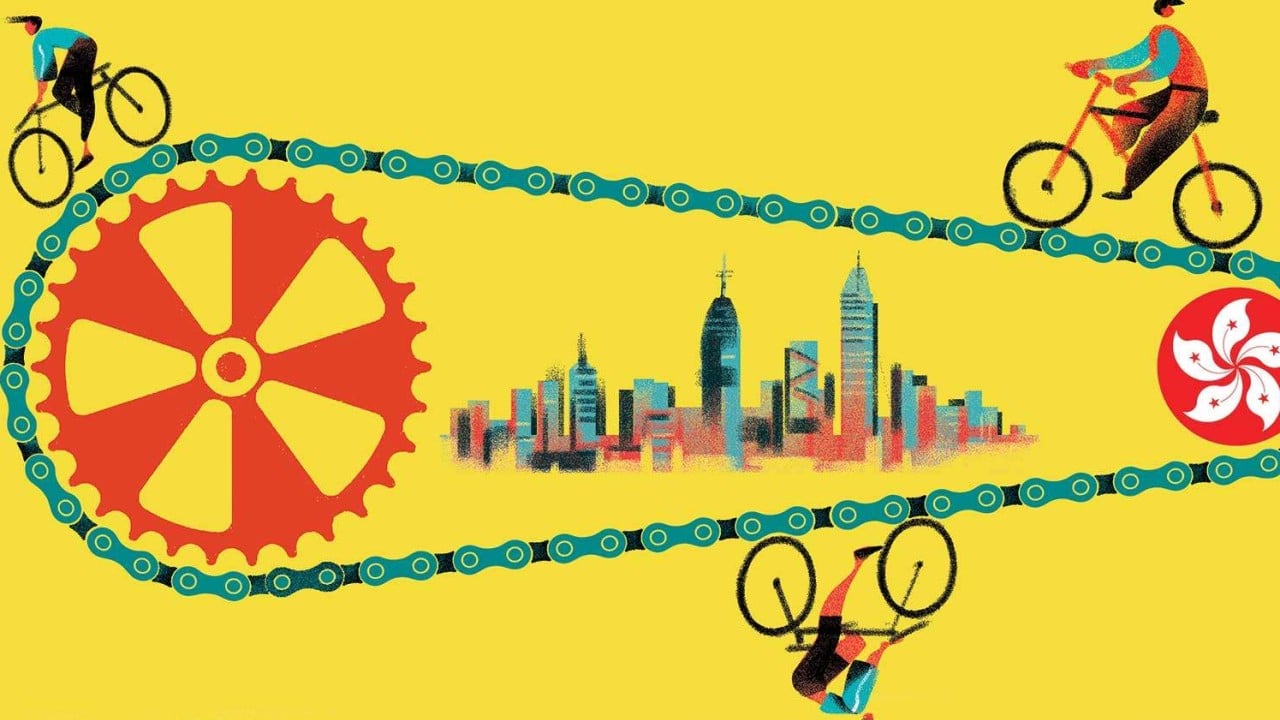
Hong Kong has a bike problem. It is not that people do not want to ride. Thousands flock to cycle tracks in Sha Tin and Tai Po every single weekend, renting tandems and dodging crowds along the Tolo Harbour. The real issue is that the government treats cycling as a weekend leisure activity rather than a legitimate mode of urban transport.
If you try to commute to a corporate office in Central or Kwun Tong on two wheels, you will quickly realize the system is rigged against you.
The Concrete Jungle Trap
Walk down Des Voeux Road Central during rush hour and you will choke on diesel fumes. You will watch thousands of commuters crawl inch by inch in cramped buses and MTR cars. Meanwhile, millions of square feet of dense urban asphalt are entirely surrendered to private cars and commercial trucks.
Hong Kong urban planners love to cite topography as the ultimate excuse. Yes, the city is hilly. Mid-Levels is steep. Peak roads are terrifying. But look at cities like Zurich, San Francisco, or even parts of Chongqing. They all have punishing slopes, yet they still manage to build connected micro-mobility networks.
Sha Tin and Tseung Kwan O prove that flat new towns can accommodate bikes just fine. The missing link is political willpower in older urban districts. Planners treat pedestrians and cyclists as afterthoughts. They force riders onto circuitous overhead footbridges or narrow waterfront promenades riddled with dismount signs.
If you want a commuter revolution, you have to take road space away from cars. There is no polite way around it.
What Actually Works on the Ground
Other dense Asian metropolises have cracked the code. Tokyo manages high-density pedestrian and bicycle integration through strict traffic calming and widespread bicycle parking infrastructure near every train station. You can park your bike securely underground or in multi-story automated racks right next to the metro.
In Hong Kong, finding a legal bike rack near an MTR station is basically an Easter egg hunt. If you tie your frame to a public railing, you risk having municipal workers clip your lock and haul your property away to an impound lot.
To chart a genuinely cycle-friendly course, the Transport Department needs to implement three immediate changes:
- Build protected, physical cycle lanes on major flat thoroughfares instead of painting token green strips that get blocked by delivery vans.
- Mandate secure, high-capacity bicycle parking hubs at major transport interchanges.
- Lower speed limits to 30 kilometers per hour across secondary urban commercial zones, giving riders safety in numbers.
The Cost of Staying Stuck in Traffic
Traffic congestion costs the local economy billions in lost productivity every year. Public health metrics also point to a sedentary population struggling with high rates of chronic stress and lifestyle diseases. Encouraging active commuting solves both crises at once.
You cannot claim to build a smart, sustainable carbon-neutral city while forcing everyone down into subterranean rail tubes or trapping them in idling taxis. Urban space is finite. Every time we prioritize a parking slot over a bike lane, we choose pollution over health.
Stop treating bicycles like toys for children or weekend hobbies for athletes. Treat them like vital infrastructure. Give riders the asphalt. Clear the legal hurdles. Let Hong Kong move.