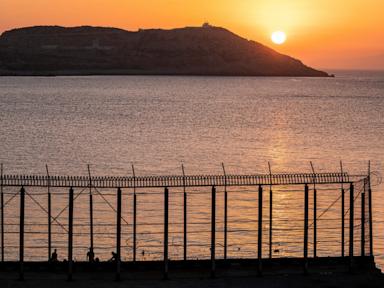
The water is freezing, the currents are ruthless, and the border fence waits on the other side as an intimidating wall of steel and razor wire. Yet, hundreds of desperate individuals keep stripping down, jumping into the Atlantic, and swimming toward the Spanish exclave of Ceuta. This isn't a random summer pastime. It's a high-stakes migration route born out of desperation, geographic reality, and strict EU border policies that leave few other options.
If you look at a map, Ceuta and Melilla are geographic anomalies. They are tiny Spanish territories physically located on the northern coast of Africa, sharing direct land borders with Morocco. That makes them the only land frontiers between the European Union and the African continent. For anyone trying to reach European soil from Morocco, these enclaves look like an open door. Reality tells a very different story.
The Geography of Desperation
Ceuta spans just about 18.5 square kilometers. It houses around 80,000 residents and sits right across from the Moroccan fnideq coast. When thick sea fogs roll in, the distance across the water blurs, making the swim look deceivingly close.
Swimmers often exploit these exact weather windows. Fog provides cover from Moroccan and Spanish patrols. But the water doesn't care about fog. Hypothermia sets in fast. Strong undertows pull swimmers off course, pushing them against jagged cliffs instead of safe beaches.
Why Swim Instead of Flying or Sailing?
Border enforcement has tightened across the Mediterranean over the last decade. Traditional boat routes leaving from mainland Morocco or Western Sahara face intense surveillance by Frontex and local authorities. Drones circle overhead. Thermal cameras track heat signatures on the dark ocean.
Fences surrounding Ceuta have grown taller, topped with non-cutting mesh and anti-climbing barriers. When land routes get locked down tight, people adapt. Swimming around the breakwaters or maritime border barriers becomes the last resort. It bypasses fences entirely, relying purely on human endurance against the tide.
The Human Cost Behind the Headlines
Numbers on a screen rarely capture the reality. Hundreds of migrants arriving in a single wave strains local reception centers designed for a fraction of that population. Temporary shelters fill up overnight. Cots spill out into corridors and gymnasiums.
Local authorities and Red Cross teams in Ceuta deal with the immediate aftermath. They hand out thermal blankets, dry clothes, and basic medical care for exhaustion and hypothermia. Many arrivals are young men, but teenagers and minors make the crossing too. The psychological toll of watching friends get swept away or getting pushed back by security forces leaves deep scars.
The Diplomatic Friction Point
Migration here isn't just a humanitarian issue. It's a geopolitical pressure valve. Morocco controls the land approach. When diplomatic relations between Rabat and Madrid sour, border controls sometimes loosen noticeably. When ties are warm, patrols increase, and attempted mass crossings drop.
This dynamic puts Ceuta right in the middle of international negotiations. Spain relies heavily on Moroccan cooperation to manage migration flows. Morocco, in turn, uses its strategic position to leverage economic aid, political support, and trade agreements from Madrid and Brussels.
What Most People Get Wrong About Border Crossings
People often assume these crossings happen on the spur of the moment. They don't. Weeks or months of planning go into timing the tides, buying wetsuits, or finding inner tubes. Smugglers charge fees for advice on weather patterns, though many swimmers strike out on their own when money runs out.
Another common misconception is that reaching Ceuta means reaching mainland Spain. It doesn't. Getting across the fence or the water only gets you into a bureaucratic waiting room. Most migrants spend months in local detention or reception facilities waiting for deportation orders or transfers to the peninsula, where their asylum applications crawl through a backlogged legal system.
The Policy Deadlock
Building higher fences hasn't stopped the flow. It has only shifted the routes and increased the danger. As long as economic inequality persists across the Strait of Gibraltar, and as long as conflict and poverty push people out of sub-Saharan Africa and parts of the Middle East, the water will look like a viable gamble.
Border walls solve political optics, not root causes. Until destination countries and transit nations figure out genuine economic partnerships and legal pathways for movement, people will keep looking at the freezing Atlantic and diving in.