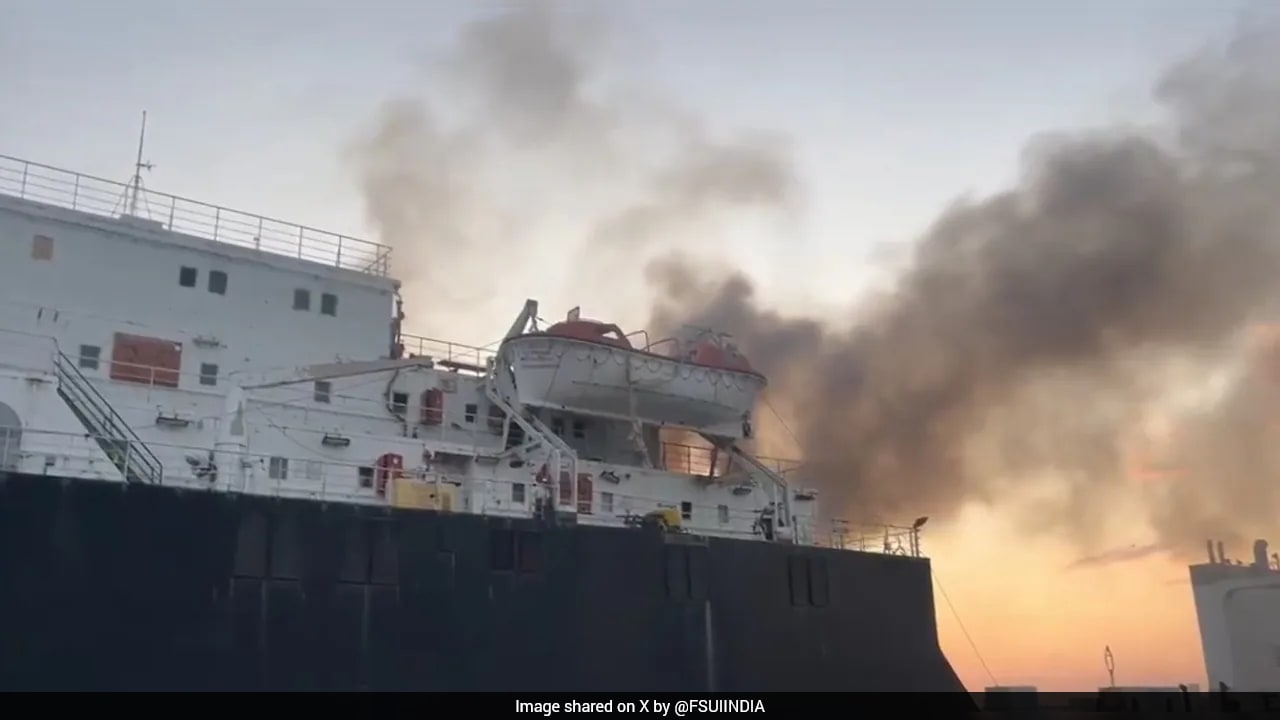
Thirteen Indian seafarers are currently staring down the barrel of an active war zone, trapped aboard the cargo vessel M.V. AMIR1 at Ukraine's Chornomorsk port.
Missiles and drones are not just background noise here. They are actively slamming into the immediate vicinity of the ship. The Forward Seamen's Union of India (FSUI) has raised urgent alarms, noting that the fifteen total crew members—dominated by thirteen Indian nationals—live in constant terror of taking a direct hit.
If you think this is an isolated incident, look closer at the Black Sea shipping routes. The maritime front of the Russia-Ukraine conflict has shifted from a localized grain corridor dispute into a high-stakes, unpredictable theater where commercial vessels are frequently caught in the crosshairs.
The Reality of Maritime Risk in the Black Sea
Commercial shipping has always carried calculated risks, but navigating near Ukrainian ports right now requires running a literal gauntlet. Just days prior to the M.V. AMIR1 crisis, the Palau-flagged cargo ship M.V. AGN RAGNAR faced a brutal drone assault near the Danube river exit. Two Indian sailors from that crew jumped overboard during the chaos and remain missing after active search operations had to be suspended due to continuous incoming fire.
These aren't abstract geopolitical statistics. India ranks as the world's second-largest supplier of commercial seafarers, making up roughly 12.2 percent of the global seafaring workforce. Because of this heavy representation, Indian crews form the backbone of merchant fleets worldwide, placing them directly on the front lines of modern maritime conflicts. When shipping companies push contracts into high-risk zones, it is Indian families who bear the brunt of the human cost.
Why Crews Remain Vulnerable
You might wonder why ships continue to dock in Ukrainian ports while a war rages overhead. Economics often overrides caution. Global trade demands continuation, and commercial pressures can push shipowners and desperate crews to accept hazardous routes.
- Contractual Pressures: Seafarers often face immense pressure from employers to honor existing agreements or risk blacklisting and financial penalties.
- Shifting Threat Perceptions: Maritime corridors that look safe on Monday can turn into active missile zones by Tuesday. Drone technology moves fast, and defense systems cannot protect every civilian cargo hull.
- Evacuation Bottlenecks: Once a port comes under heavy bombardment, traditional escape routes vanish. Airports are closed, local infrastructure is compromised, and stepping off a vessel can mean walking straight into an active combat zone.
The FSUI has directed urgent appeals toward the Indian government, shipowners, and the flag state to orchestrate immediate rescue and repatriation protocols for the men on the AMIR1. Diplomatic channels are working overtime, but cutting through international red tape while drones buzz overhead is agonizingly slow.
What Needs to Happen Next
Protecting seafarers requires more than post-crisis rescue missions. The Ministry of External Affairs has repeatedly issued advisories urging workers to carefully evaluate security risks before accepting assignments in the Black Sea region. However, advisories alone do not pay bills or stop missiles.
Maritime regulatory bodies must enforce stricter, legally binding exclusion zones that penalize operators who gamble with human lives for profit. Until commercial safety is prioritized over cargo delivery schedules, crews on ships like the M.V. AMIR1 will continue to pay the price for a war they have no part in fighting.
Check your current employment contracts if you work in maritime logistics, verify the true security status of regional port calls, and demand absolute clarity from your agency before stepping onto any vessel heading toward contested waters.
13 Indian Sailors Trapped in Ukraine Waters Amid Deadly Drone and Missile Threats | NXW
This video report provides a closer look at the ongoing situation surrounding the trapped crew members and the escalating risks in Ukrainian waters.
http://googleusercontent.com/youtube_content/1