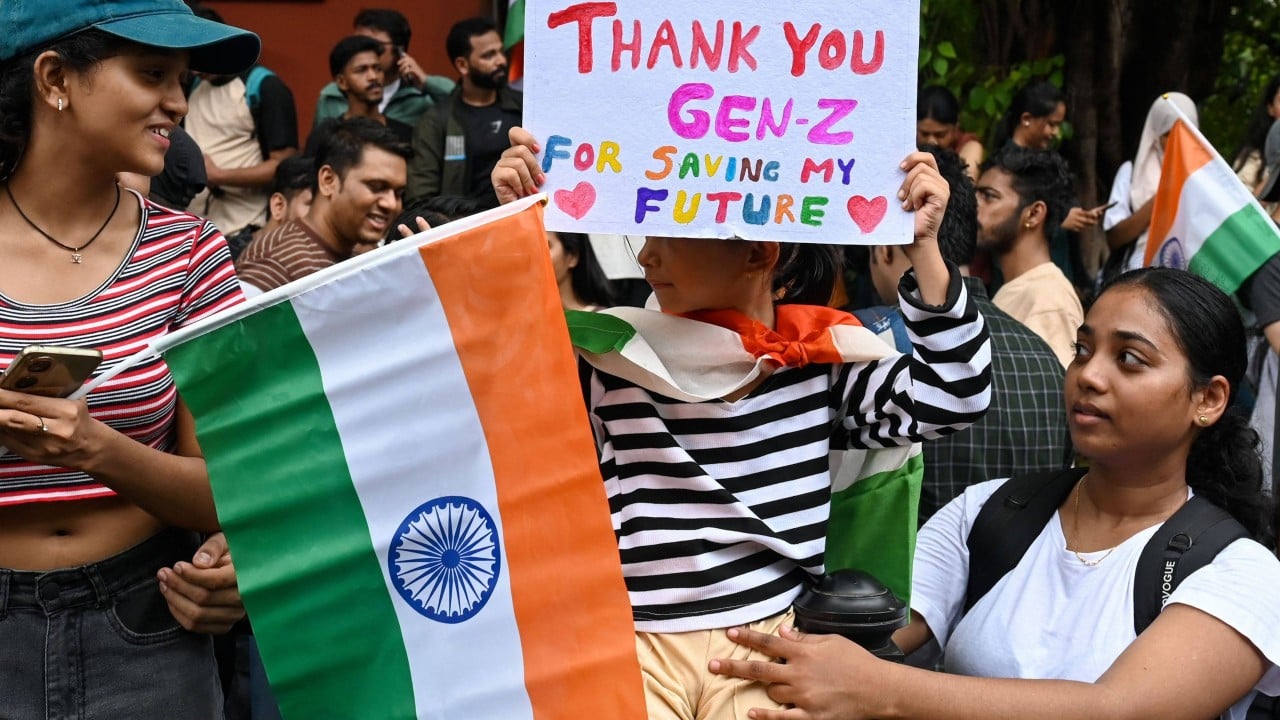
Millions of young Indians spend years locked in small rooms, staring at textbooks, chasing a single golden ticket: a stable government job or a medical seat. When that system breaks down, people snap. That raw anger fueled the "Cockroach" protests, a youth-led uprising that caught the establishment completely off guard.
If you want to understand why thousands took to the streets in Delhi under the banner of the Cockroach Janta Party (CJP), look past the catchy slogans. This isn't just about leaked test papers. It's a massive warning sign about a shrinking future for an entire generation. For a deeper dive into similar topics, we suggest: this related article.
How a Courtroom Insult Sparked a Movement
The spark didn't start in a university lecture hall. It started with a careless comment. Chief Justice Surya Kant faced intense backlash after he was perceived to have likened unemployed youth and activists to cockroaches. While officials later argued the remark targeted people with fake credentials, the damage was already done.
Instead of hiding, students owned the insult. Abhijeet Dipke, a student returning from the United States, launched the satirical Cockroach Janta Party online. A one-line tweet asking what happens when all the cockroaches come together turned into a digital wildfire. To get more background on this topic, detailed analysis can also be found on Associated Press.
Cockroaches survive everything. They're resilient, hard to crush, and multiply in the dark. Young job seekers saw themselves in that description. They turned a slur into a badge of honor, proving that mockery often backfires on those in power.
The Real Crisis Isn't Just Leaked Exams
Paper leaks happen all the time in India, but the National Eligibility-cum-Entrance Test (NEET-UG) scandal broke the camel's back. Data shows over 110 major exam leaks affecting more than 22 million candidates over the last two decades, with the vast majority occurring under the current administration.
When exams get canceled or rigged, it's not just a logistical failure. It steals years of a young person's life. Families borrow money to pay for coaching classes. Students sacrifice their twenties studying fifteen hours a day.
When those tests get compromised, the social contract shatters. Meritocracy becomes a cruel joke. If you work hard and still lose your spot to someone who bought the answers, the system is rigged. That is the exact social mobility crisis driving these protests.
Why This Uprising Hit Different
Governments in New Delhi are used to handling protests. They weathered massive farmer demonstrations and ideological rallies over the years. But this movement baffled political analysts because it didn't fit the old playbook.
- No traditional ideology: Most participants don't belong to opposition political parties. They're ordinary students and middle-class youth who just want a fair shot.
- Horizontal leadership: While figures like Dipke and activist Sonam Wangchuk drew massive crowds, the protest operated as a fluid, internet-driven network rather than a rigid party.
- Relentless pressure: Even after police crackdowns and late-night video appeals from Prime Minister Narendra Modi, the crowds stayed put until Education Minister Dharmendra Pradhan resigned.
Getting a cabinet minister to step down doesn't fix the underlying rot. Prahlad Joshi stepped into the role, but changing the face at the top doesn't create millions of new jobs.
What Comes Next for India's Youth
The protests paused after the government blinked on key demands, but the structural crisis remains completely unsolved. India's economy is growing on paper, yet good jobs remain entirely out of reach for millions of graduates.
If you're watching South Asian politics, pay attention to this demographic. Gen Z across the region—from Bangladesh to Sri Lanka—has shown they can dismantle governments when pushed to the edge.
Leaders can ignore online satire. They can try to sweep youth unemployment under the rug. But you cannot spray enough poison to get rid of millions of people who refuse to stay invisible.
India's 'Cockroach' protests end as government gives in to key demands
This news report covers the conclusion of the protests and examines whether this movement marks a permanent shift in Indian politics.