When renowned activist and educator Sonam Wangchuk ended his 26-day hunger strike after high-stakes negotiations with Indian federal ministers, critics expected the youth movement around him to quietly fizzle out. They couldn't be more wrong.
What started as a satirical viral meme page has grown into one of the most stubborn public uprisings India has witnessed in years. High school graduates, frustrated job-seekers, and parents aren't packing up their protest banners. They're demanding the immediate resignation of Union Education Minister Dharmendra Pradhan, and they aren't backing down.
If you've been trying to make sense of what's happening across New Delhi, Pune, and Bengaluru, here is the full story behind the "Cockroach" movement, why Wangchuk stepped back, and where this massive youth movement is heading next.
How an Insult Born in the Supreme Court Sparked a Mass Movement
To understand why thousands of young Indians are facing down tear gas and police barricades, you have to go back to May.
During a Supreme Court hearing on May 15, Chief Justice Surya Kant made a controversial remark dismissing unemployed young activists, comparing them to "parasites" and "cockroaches" who lacked a place in professional society.
Instead of backing down, India's Gen Z flipped the narrative.
Within hours, Abhijeet Dipke, a graduate student at Boston University, launched a parody page called the Cockroach Janta Party (CJP). The message was simple: if the system views struggling young people as pests, those "pests" will unite.
Within 78 hours, the page amassed three million followers. Today, it boasts over 22 million followers across social media, transforming a court insult into a full-scale political phenomenon.
May 15: Supreme Court chief justice compares unemployed youth to "cockroaches"
May 16: Cockroach Janta Party (CJP) is founded on social media
June 6: CJP calls for street protests over entrance exam leaks
June 28: Renowned educator Sonam Wangchuk begins a fast in solidarity
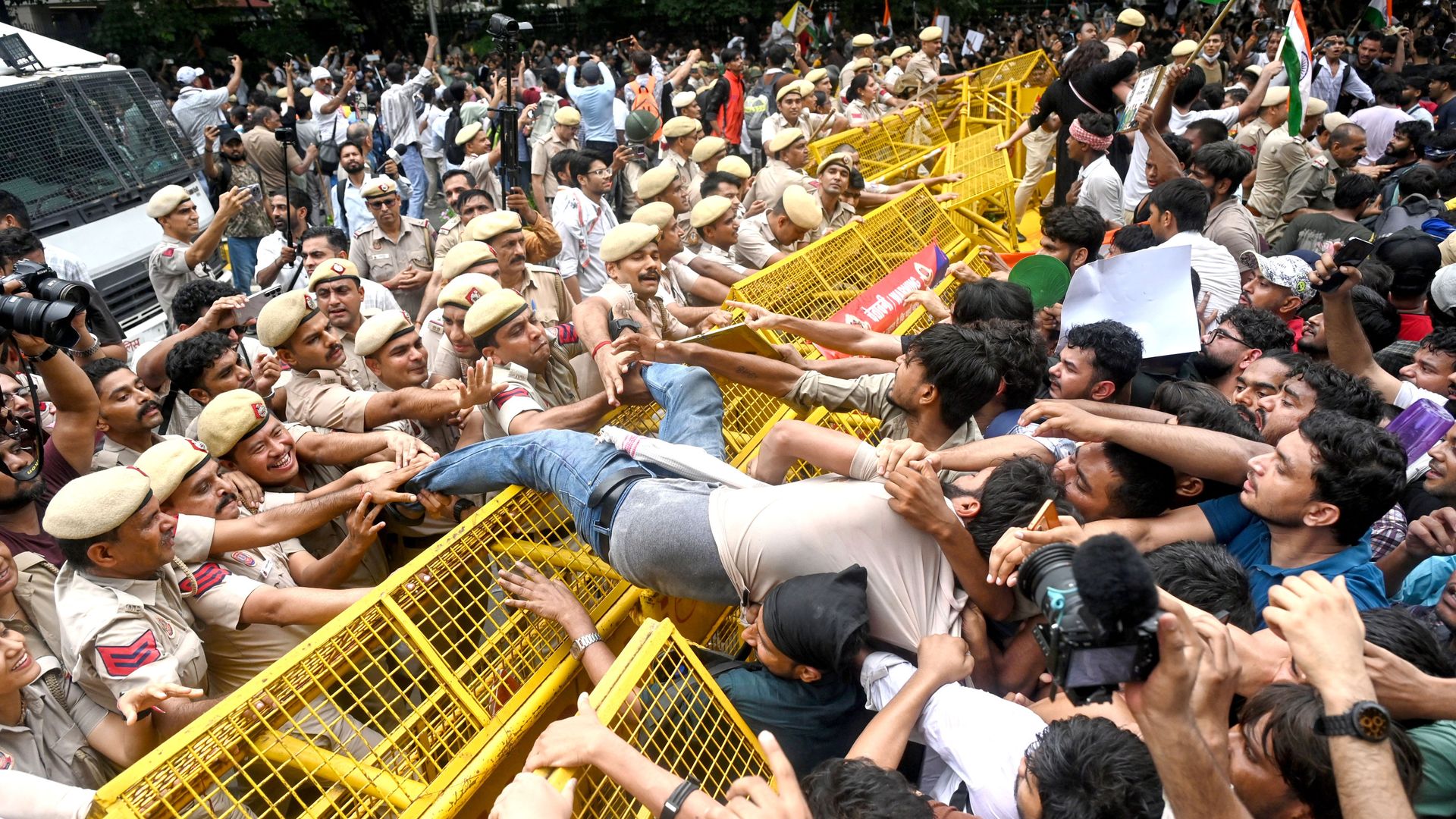
July 20: Police clash with marchers as thousands attempt to reach Parliament
July 24: Wangchuk ends 26-day hunger strike after federal talks; protests continue
The Systemic Crises Fueling the Anger
The satirical name masks genuine rage over systemic breakdown:
- Massive Exam Leaks: Irregularities and paper leaks in critical national exams—including the National Eligibility cum Entrance Test (NEET) for aspiring medical students—have thrown millions of lives into limbo.
- Severe Youth Unemployment: Millions of graduates compete for a handful of government jobs, spending years studying for exams that end up cancelled or compromised.
- Mental Health Toll: Broken promises and compromised tests have driven dozens of desperate students to suicide across the country.
Why Sonam Wangchuk Stepped Back After 26 Days
At 59, Sonam Wangchuk—the real-life inspiration behind India's famous educational reform movements in Ladakh—was the most high-profile public figure to join the youth-led hunger strike at New Delhi's Jantar Mantar.
For nearly four weeks under blistering heat, Wangchuk survived on water, drawing national attention to the students' demands. But on July 24, after being briefly transferred to Safdarjung Hospital by police citing medical urgency, Wangchuk formally broke his fast in the presence of two federal ministers.
In an official statement, Wangchuk shared that he agreed to end his strike following direct appeals from dozens of lawmakers, lengthy negotiation over key conditions, and serious concerns about escalating violence against young demonstrators.
"If not fasting, what? Riots in the streets? That's what we don't want to do. So this is a peaceful way to take your voice to the government." — Sonam Wangchuk
While Prime Minister Narendra Modi publicly addressed the protests for the first time by proposing fast-track courts and new federal legislation to penalize exam leaks, the concessions fell short for student leaders on the frontlines.
Why the Protests Are Heading Into a Harder Phase
Wangchuk's fast provided a moral anchor, but the movement's engine belongs to the students. Following news of his fast ending, CJP founder Abhijeet Dipke declared unequivocally: "We won't let Sonam sir's sacrifice go in vain."
The core demands from the Cockroach movement remain firm:
- Ministerial Accountability: Direct resignation of Education Minister Dharmendra Pradhan.
- Systemic Overhaul: Full structural reform of the National Testing Agency (NTA).
- Compensation: Financial and institutional support for families of students who suffered due to exam cancellations and leaks.
The government's heavy-handed tactics—deploying multi-layered barricades, shutting down official social media accounts of CJP organizers, and utilizing tear gas near Parliament—have only solidified the protesters' resolve.
GOVERNMENT ACTION               PROTESTER RESPONSE
Fast-track courts proposed  -->  Reject compromise; demand minister's exit
Social media accounts blocked -->  Shift to decentralized encrypted networks
Police barricades in Delhi   -->  Simultaneous protests in regional hubs
What Happens Next: Concrete Actions to Follow
If you're tracking this developing movement or supporting reform efforts, keep an eye on these immediate developments:
- Regional Mobilization: Watch regional hubs like Pune, Lucknow, and Bengaluru. As security tightens around New Delhi's high-security central vista, protest coordinators are decentralizing gatherings to state capitals.
- Parliamentary Pressure: Opposition parties are leveraging the youth protests to push for a dedicated parliamentary debate on national examination security during the ongoing Monsoon session.
- Policy Monitoring: Watch for draft text on proposed anti-leak legislation. Student legal advisory teams are reviewing whether proposed bills contain real enforcement mechanisms or merely stiffer penalties without oversight.
The Cockroach Revolution has evolved far past a simple internet viral trend. By turning an insult into a rallying cry for educational integrity, India's youth have made one thing clear: they aren't going back into the dark.