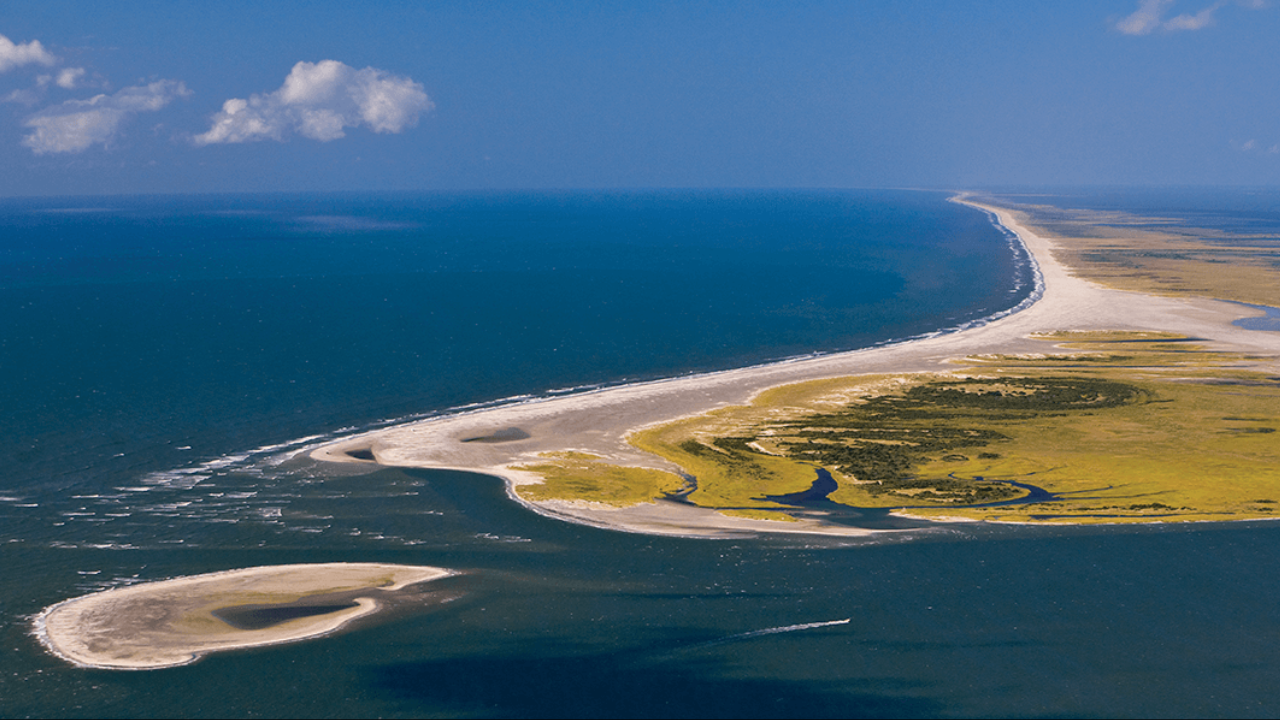
The wind off Pamlico Sound doesn't care about property deeds or government conservation plans. It just howls across the salt marsh, rattling loose windowpanes and eroding the sandy banks of North Carolina's barrier islands. Back in 1967, Henry Pigott stood right in the middle of that wind and made a choice that changed the fate of Portsmouth Village forever.
He didn't want to leave his home. So, when he signed away his land to help create the Cape Lookout National Seashore, he attached a single condition. He wanted a life estate. He wanted to stay put.
The Rise and Fall of a Barrier Island Port
To understand why Pigott's handshake mattered, you have to look at what Portsmouth Village used to be. Founded by the North Carolina Colonial Assembly back in 1753, it wasn't just a quiet fishing hamlet. It was a bustling lightering port. Massive ocean-going ships couldn't navigate the shallow waters of the local inlets, so they pulled up near Portsmouth to unload cargo onto smaller, shallow-draft boats.
By 1860, nearly 700 people called the village home. Then the world shifted. Nature and commerce conspired against the island. A violent hurricane in 1846 opened up a deeper inlet at Hatteras, drawing shipping lanes away from Ocracoke and Portsmouth. Economic depression, the upheaval of the Civil War, and the relentless isolation chipped away at the population.
By the mid-twentieth century, the post office was gone. The U.S. Life-Saving Station closed its doors in 1937. Most families packed up their skiffs and moved to the mainland. Not Henry.
Living on the Edge of the World
Born on the island in 1896, Pigott was stitched into the very fabric of Portsmouth. His roots ran deep. His grandmother had lived there during the era of slavery, and his family remained tied to the land long after emancipation.
Henry became the island's lifeline. He worked as a trusted hunting guide, a master craftsman who carved his own working duck decoys, and crucially, the local mail carrier. Every day, he would pole his flat-bottomed skiff out across the choppy waters to meet the incoming mailboat, fetching letters, packages, and supplies for the few remaining souls who refused to quit the island.
When the federal government started buying up tracts for the Cape Lookout National Seashore in the late nineteen-sixties, Pigott agreed to sell his 1902-built home. But the life estate clause ensured he could finish out his days looking out over the creek. He became, by default, the final male resident of Portsmouth Village.
What Life Estates Actually Mean for Historic Places
A life estate is a legal arrangement that pops up often in public land acquisition, but rarely with such poetic finality. It grants a property owner the right to use and occupy a home for the remainder of their natural life after selling the underlying title to a buyer, usually a conservation trust or government agency.
For the National Park Service, it's a practical compromise. It lets conservation projects move forward without forcing elderly residents onto the mainland against their will. For Henry, it meant he could wake up in his pink-and-yellow trimmed cottage, listen to the marsh birds, and maintain his independence on a roadless island.
He lived there alone with his memories after his sisters moved away, keeping watch over a settlement that was slowly transitioning from a living community into a historic ghost town in all but name.
The Final Chapter of Portsmouth
Henry Pigott passed away in 1971. With his death, the last anchor holding the community to the present day slipped away. The final two permanent residents, Elma Dixon and Marian Babb, packed their belongings and reluctantly left for the mainland shortly afterward.
The island fell entirely silent. Yet, because of the deal struck decades ago and the subsequent preservation efforts, Portsmouth Village didn't rot away into complete oblivion. Today, the National Park Service and preservation groups maintain the old wooden houses, the empty schoolhouse, and the Methodist church.
If you take a boat out to Cape Lookout today and walk across the wooden bridge spanning Doctor's Creek, you can still spot Henry's old house. It stands as a physical reminder of the person who refused to let go of a dying town until the very end.
Plan a trip to the southern Outer Banks to see the unpaved paths of Portsmouth Village yourself, or support local maritime heritage groups working to keep these windswept historical structures standing against the next big storm.