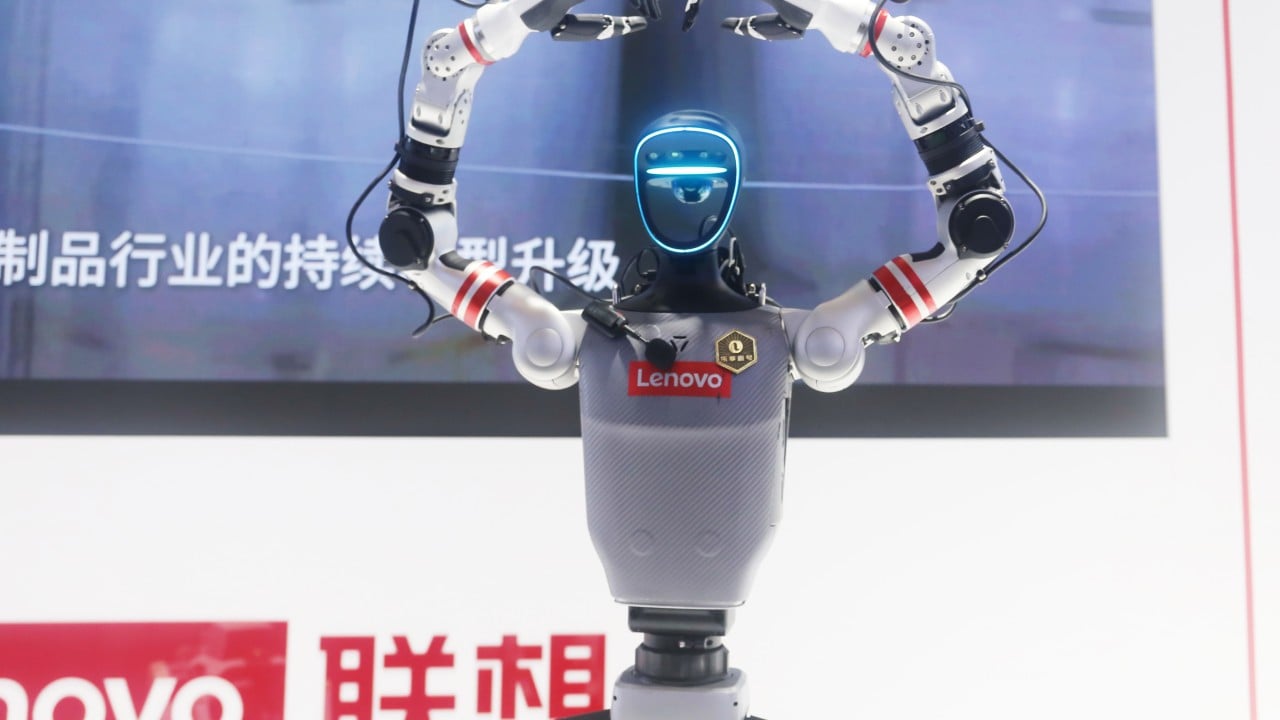
The venture capital rush toward basic foundational models is officially cooling down. Big investors are done throwing money blindly at every startup claiming to build a new large language model. Instead, firms are getting remarkably specific. Lenovo Capital and Incubator Group is leading this shift with a focused approach targeting high-utility corners of the artificial intelligence market.
If you look past the standard corporate press releases, the strategy centers on a simple premise: software that actually does work autonomously is where the real money lives. Song Chunyu, the chief investment officer at Lenovo Capital, has detailed a vision targeting roughly 100 AI companies across specialized sectors like robotics, coding agents, and efficient chips. They aren't trying to boil the ocean. They're picking specific targets with sniper precision.
The Death of General Foundation Model Hype
Everyone built a general-purpose chatbot over the last few years. It was fun, it was loud, and it flooded the market with commoditized technology. Enterprises quickly realized that talking to a generic model doesn't automatically translate to bottom-line revenue.
Lenovo Capital's approach recognizes that the market has matured past simple conversational interfaces. Companies don't want another chatbot. They want systems that write code, manage infrastructure, and physically manipulate objects in warehouses.
When you shift investment dollars toward coding agents, you are funding tools that shorten software development lifecycles. When you back robotics, you are entering the physical domain where labor shortages and efficiency demands are biting hard. It is a calculated pivot toward utility rather than novelty.
Why Coding Agents and Robotics Matter Right Now
Building software is expensive and slow. Coding agents change the equation by automating repetitive development tasks, debugging legacy systems, and generating boilerplate code without human hand-holding. Developers aren't losing their jobs tomorrow, but their workflows are speeding up drastically. Venture funds know that any tool saving developers time will instantly find a paying corporate customer.
On the other side of the portfolio is physical automation. Humanoid and industrial robots are moving out of research labs and onto factory floors. Labor costs are rising globally, and supply chains remain fragile. Automated hardware integrated with advanced machine learning models fills the gap where human labor is scarce or too dangerous.
Filtering the Noise in the Chip Market
You cannot run advanced robotics or complex coding agents on standard, power-hungry hardware. That is why the investment strategy also targets specialized inference chips.
The semiconductor market is crowded, especially in regions like China where export restrictions have forced domestic innovation into overdrive. Dozens of chip startups are fighting for survival. A targeted funding approach looks past the hype and backs hardware manufacturers that solve real bottlenecks in data processing speed and energy consumption. Consolidation is coming for these chip makers, and disciplined investors are separating the long-term survivors from the fleeting participants.
What This Means for the Rest of the Tech Ecosystem
Venture capital sets the tone for where engineering talent flows. When major institutional players like Lenovo Capital tighten their focus onto embodied intelligence and task-specific automation, founders take notice.
You see fewer general wrapper startups and a lot more vertical integration. Startups are forced to prove they can solve a specific operational pain point for an enterprise client on day one. If your software can't automate a multi-step workflow or integrate with physical hardware, you're out of the running for serious capital.
The era of easy money for vague AI concepts is gone. Precision investing has taken over, and the market is better for it.