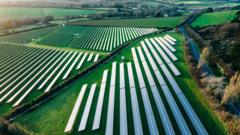
If you live in a rural area, you’ve likely seen the signs. "No to Solar" placards on fence posts. Heated village hall meetings. Massive petitions landing on a planning officer’s desk. Yet, time and again, the diggers arrive and the solar panels go up.
It’s easy to feel like the system is rigged. You see a green field, you think of local character or agricultural output, and you see a corporate entity seeing a site for a 40-year lease. When your local council votes "no" but the project gets approved anyway, the frustration is real.
But why does this keep happening? It isn’t a conspiracy. It’s a cold, hard clash between local sentiment and national energy mandates.
The Planning Balance Explained
At the heart of every solar farm approval is a technical concept called the "planning balance." It sounds like a dry, bureaucratic term, but it’s the legal scales that determine your neighborhood's future.
When a developer submits a plan, the local authority isn't just asking, "Do the neighbors like this?" They are asking if the benefits of the project outweigh the harm.
Here is what that looks like in practice:
- The Benefits: Renewable energy generation, contribution to national net-zero targets, energy security, and grid-scale stability.
- The Harms: Visual impact, loss of agricultural land, noise during construction, and changes to the local "character."
Honestly, when you weigh "the planet’s energy crisis" against "my view of the hills," the former almost always wins in the eyes of a planning inspector. National policy is incredibly weighted toward renewable energy. If a developer has done their homework—hiding the site behind hedgerows, proving the land isn't the highest-grade agricultural soil—the legal case for refusal becomes almost impossible to maintain.
Why Local Councils Lose Appeals
You might wonder why a local council’s rejection carries so little weight. It’s often because of the appeal process.
Developers are sophisticated. They don't submit plans they don't think they can win. If a local committee decides to go against the advice of their own planning officers—who are paid to follow the rulebook—the developer goes to the Planning Inspectorate.
The inspector isn't from your town. They don't know your shortcut through the fields or why you love that specific view. They are looking at the National Planning Policy Framework. If the local council hasn't provided rock-solid, evidence-based reasons for refusal that hold up to legal scrutiny, the inspector will overturn the decision.
And they do it a lot. Statistics show that the vast majority of solar farm applications eventually get the green light, whether at the local level or on appeal.
The Real Issues That Actually Stop Projects
If you’re frustrated by a project, don't waste your energy on generic "I don't like it" complaints. They don't work. The projects that actually get blocked are usually stopped for specific, evidence-backed reasons:
- Grid Capacity: You can have all the panels in the world, but if the local grid can’t handle the power, the project is dead in the water. Developers often face "zombie queues" where they wait years for a connection.
- Agricultural Land Quality: There is a clear policy push to protect "Best and Most Versatile" (BMV) land. If you can prove the site is high-grade soil essential for food security, you have a much stronger argument than if it’s low-grade scrub.
- Cumulative Impact: This is the big one. If your area already has three massive solar farms, the argument that a fourth one will destroy the "character" of the area carries much more weight. It’s hard for a developer to argue there’s no harm when you’re already drowning in panels.
What You Should Actually Do
If a new proposal pops up near your home, yelling at your local councillor won't do much. The system is designed to favor infrastructure that meets national goals.
If you want to influence the outcome, you need to engage in the technical details:
- Hire a consultant: If you’re part of a local action group, pool your money to hire an independent planner. They can point out if the developer’s environmental survey is flawed or if they’ve underestimated the visual impact.
- Focus on the evidence: Did they check the drainage properly? Is the land actually high-quality farmland? Is the glint and glare study accurate? A factual, pointed challenge is ten times more effective than a emotional letter.
- Look for community benefit: If you can't stop the project, push for concessions. Ask for better screening, new tree lines that actually benefit the local area, or community funding for other local projects.
Solar farms are essentially long-term utility infrastructure. They aren't going away, and in most cases, the shift toward renewables means they’re inevitable. Stop fighting the inevitability and start focusing on the specific ways the project impacts your immediate environment. That’s where the real power lies.