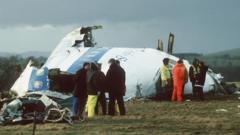
Thirty-eight years after Pan Am Flight 103 blew up over a quiet Scottish town, justice remains trapped in legal purgatory.
If you expected closure from the long-awaited U.S. federal trial of Abu Agila Mohammad Mas'ud Kheir Al-Marimi, think again. U.S. District Judge Dabney Friedrich pressed pause on the proceedings just days before jury selection was set to begin in Washington, D.C.
This sudden postponement throws a wrench into decades of grief, legal maneuvering, and geopolitical posturing. Let's look at why this trial keeps stalling and what it actually means for the pursuit of accountability.
The Reality Behind the Last-Minute Postponement
Courts don't halt high-profile murder trials days before opening statements on a whim. In this case, the abrupt delay stems from newly discovered evidence that defense attorneys need time to properly examine.
Mas'ud, a former Libyan intelligence official, stands accused of constructing the exact bomb that detonated in the cargo hold on December 21, 1988. That explosion killed 259 people on board and another 11 residents on the ground in Lockerbie.
When authorities seized Mas'ud from Libya in 2022 and brought him to American soil, prosecutors hailed it as a massive breakthrough. They built a case heavily reliant on a 2012 confession Mas'ud allegedly made to security officials while imprisoned in post-Gaddafi Libya.
Here is where the defense pushes back hard. Defense lawyers argue that statement was extracted under coercion. They are also challenging the admissibility of video-recorded witness testimonies and questioning whether U.S. courts even possess proper jurisdiction over an event that happened decades ago across the Atlantic.
Every time a new box of documents opens or an old piece of evidence gets contested, the timeline stretches further. You're left with a legal process moving at a glacial pace while witnesses and family members age.
Unpacking the Decades-Long Search for Accountability
Most people assume the Lockerbie case concluded years ago. After all, a special Scottish court sitting in the Netherlands convicted Abdelbasset al-Megrahi back in 2001, while acquitting his co-accused Al Amin Khalifah Fhimah. Megrahi later died in Tripoli in 2012 after being released on compassionate grounds, leaving deep divisions over whether lone actors or a broader state conspiracy carried out the bombing.
Mas'ud's trial represents the first time an actual suspect faces a U.S. courtroom for the attack. That distinction matters immensely to American families who lost children, spouses, and parents—including dozens of college students flying home for the holidays.
Yet, prosecuting a crime that occurred nearly four decades ago creates a nightmare for evidence preservation. Memories fade. Documents vanish. Witnesses pass away. Relying on confessions obtained during political upheaval in Libya adds layers of institutional skepticism.
The Heavy Burden of Historic Trials
Putting history on trial sounds noble in theory. In practice, it turns into a bureaucratic marathon of evidentiary motions, jurisdictional debates, and health-related adjournments. Mas'ud is now in his seventies, and his defense team has previously flagged ongoing medical vulnerabilities as a compounding factor in trial readiness.
Victim advocacy groups and families affected by Pan Am Flight 103 face a familiar, exhausting cycle of anticipation followed by disappointment. Prosecutors from the Crown Office in Scotland and the U.S. Department of Justice insist their commitment remains absolute, but legal reality dictates that fairness to the accused—no matter how heinous the charges—requires giving defense counsel time to review newly surfaced material.
What Happens Next
The court has yet to set a firm new date for jury selection while the defense digests this latest batch of evidence. Expect more pre-trial wrangling over what statements can and cannot be read to an American jury.
If you are following this case for definitive answers about the inner workings of 1980s state-sponsored terror, prepare for a long wait. Keep your eyes on the upcoming pre-trial motions regarding the 2012 interrogation records. That single evidentiary ruling will likely dictate whether this historic trial ever reaches a meaningful verdict.