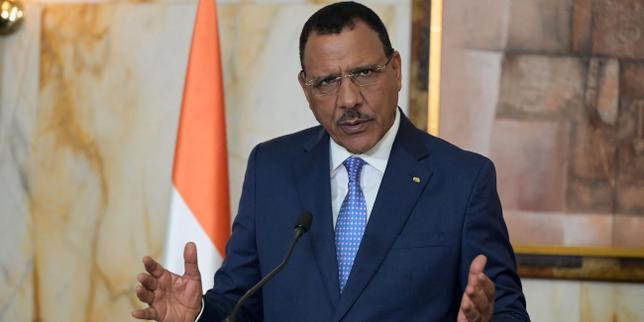
Three years have passed since a sudden military coup trapped Niger's democratically elected leader inside his own presidential palace. Today, Mohamed Bazoum remains cut off from the world, marking a grim milestone that exposes deep political fracture lines across the Sahel.
The international consensus on his detention is clear, yet practical options for his release are practically nonexistent. When the presidential guard seized power on July 26, 2023, they didn't just remove a head of state; they locked away a stubborn symbol of constitutional rule who refuses to resign.
The Reality of Arbitrary Detention
If you look past the official press statements from Niamey, the day-to-day conditions of Mohamed Bazoum and his wife, Hadiza, are stark. An international collective of lawyers, including prominent figures like human rights attorney Reed Brody, point out a harsh truth. Neither Bazoum nor his wife has ever faced a legitimate magistrate. They sit in a wing of the presidential residence without formal charges, standard legal safeguards, or meaningful outside contact.
The military junta led by General Abdourahamane Tiani tossed out the old constitution long ago. They replaced it with a transitional charter that stretches their grip on power for years. When the junta lifted Bazoum's presidential immunity, they floated threats of treason trials and capital punishment. Yet, no public court date has ever materialized.
Why the Junta Keeps Him Locked Away
Observers often ask why the military regime hasn't simply put him on trial or let him go into exile. The answer comes down to calculated security posturing rather than standard criminal justice.
For the men holding the keys in Niamey, Bazoum acts as a high-stakes leverage point. Legal teams representing the ousted president note that the junta views him as a human shield against potential regional military interventions. Keeping him locked down serves as a constant insurance policy against external pressure from West African bodies or Western allies.
Meanwhile, domestic space for opposition has shrunk dramatically. Independent journalists, human rights defenders, and civil society actors face regular crackdowns. Dissension is treated as a direct threat to state sovereignty.
Shifting Geopolitics in the Sahel
Niger's new rulers have aggressively rebranded their foreign policy around absolute sovereignty. They severed longstanding military cooperation agreements with France, forced out foreign counter-terrorism troops, and pivoted toward new partnerships, including security dialogues with Russia and renewed tactical contacts with the United States.
Western nations find themselves caught in a bind. The European Union and various international bodies regularly issue strongly worded resolutions demanding immediate freedom for Bazoum. Yet these declarations often backfire locally, sparking state-backed protests in Niamey against perceived foreign interference.
Regional bodies like ECOWAS struggled to maintain a unified, effective front after initial threats of force fizzled out. Diplomacy hit a brick wall against a junta determined to rewrite the rules of governance on its own terms.
What Happens Next
As the fallout from the 2023 coup stretches deep into its third year, the legal limbo surrounding Mohamed Bazoum highlights a wider regional crisis. Democratic transitions across West Africa are stalling out, replaced by prolonged military rule and closed political systems.
You won't find a clean diplomatic resolution waiting around the corner. The junta holds all the physical cards in Niamey, and international pressure lacks the teeth to force their hand. Until regional power dynamics shift or internal pressures fracture the regime, Bazoum remains confined to his palace rooms, a striking emblem of a continent caught between constitutional ideals and military force.