Rumours can dictate global markets faster than actual military strikes. When reports surface that Iran's Supreme Leader Mojtaba Khamenei is clinging to life in a hospital bed, the geopolitical echo chamber lights up instantly. Western intelligence memos leak, regional networks broadcast competing narratives, and everyone tries to decode what is happening behind Tehran's heavy security curtains.
Yet reality on the ground is far messier than clean media headlines suggest.
The core question driving global search traffic right now is simple: Is Mojtaba Khamenei actually running Iran, or is his severe health crisis creating a complete vacuum at the top? To answer that, you have to look past the official state propaganda and evaluate how absolute power actually operates inside a cornered regime.
The Anatomy of a Forced Disappearance
Mojtaba Khamenei stepped into the role of Supreme Leader in March 2026, inheriting a ruined landscape following the death of his father, Ayatollah Ali Khamenei, in the opening wave of US-Israeli airstrikes on February 28.
From day one, his tenure has been defined by his total absence. He hasn't appeared at a live public televised event since taking power. Instead, state media relies on a steady drip of written directives, recycled clips, and carefully managed state-agency releases.
Why the secrecy? Security is the obvious answer. But medical reality plays a massive role too. International intelligence assessments and regional reports point to a grim underlying truth: Mojtaba was wounded and potentially disfigured during the same late-February compound strikes that killed his father, wife, and son.
When state-run outlets push out a rare short video or claim that President Masoud Pezeshkian just sat down for a lengthy, cordial chat with the supreme leader, they are waging an information war. They need to counter persistent leaks from opposition networks and foreign intelligence claiming the leader is unconscious, hospitalized in Qom, or entirely incapacitated.
The Pezeshkian Meeting Paradox
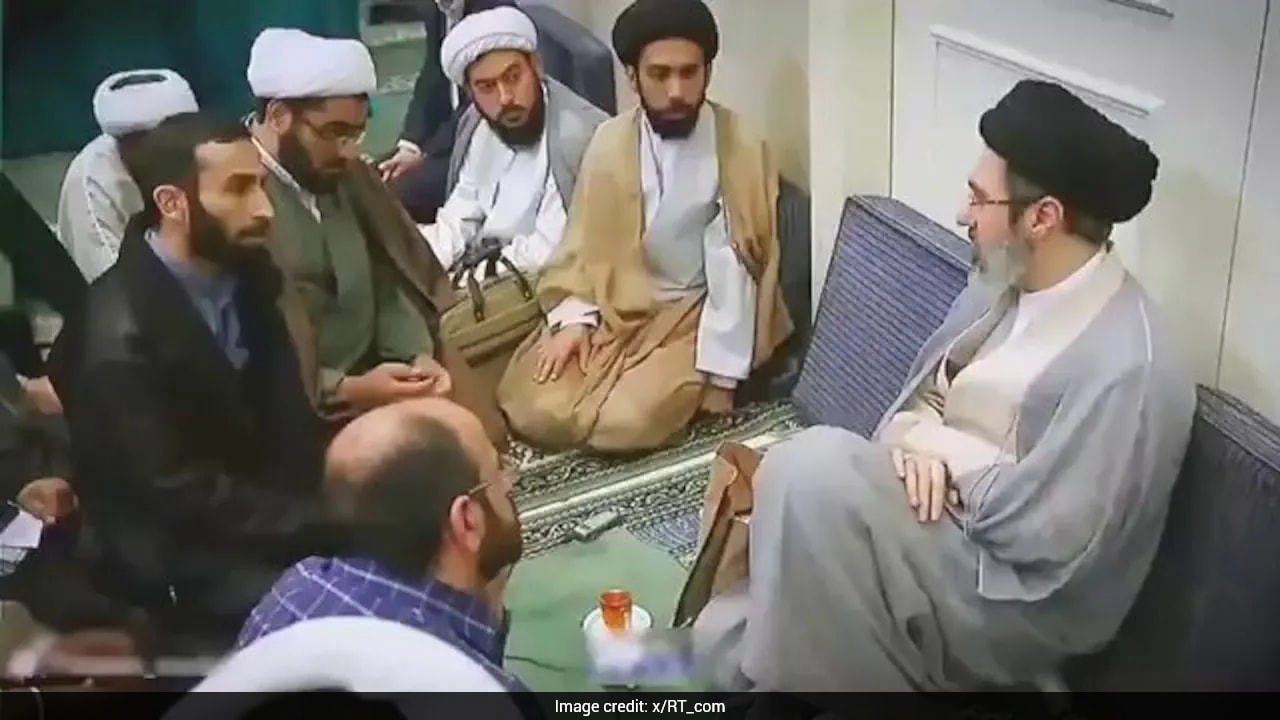
The recent high-profile claims surrounding a meeting between President Masoud Pezeshkian and Mojtaba Khamenei highlight the bizarre inner workings of Tehran's current administration. Pezeshkian publicly claimed he spent two and a half hours discussing economic livelihoods and foreign policy with the supreme leader.
Independent security analysts and opposition reports tell a completely different story. Whispers from diplomatic circles suggest that any direct contact has been heavily restricted, with some accounts describing tightly controlled, shadowy encounters where verification remains nearly impossible.
This friction reveals a deeper institutional fracture. While figures like Pezeshkian and foreign policy teams attempt to project stability and navigate delicate post-war diplomacy with Washington, hardline military elements inside the Islamic Revolutionary Guard Corps manage the day-to-day apparatus. When the supreme leader cannot safely show his face or speak freely on live television, power inevitably decentralizes into the hands of military commanders and security chiefs.
Why This Matters Outside Iran
You might wonder why a health bulletin from Tehran impacts global stability.
Transitions in theocratic states are fragile. When a supreme leader assumes office under the shadow of war and physical trauma, the entire political hierarchy operates on borrowed time. If Mojtaba's medical condition deteriorates to the point where concealment fails, internal factions will fight openly for ultimate control.
The Islamic Revolutionary Guard Corps stands ready to absorb any power vacuum. For international markets, energy traders, and foreign policy planners, tracking these health rumors isn't just about gossip. It is the only early warning system available for predicting Iran's next strategic pivot.
Watch the state television broadcasts closely, but trust the underlying structural tensions. Iran's leadership crisis is far from resolved, and the true test of regime survival is still ahead.