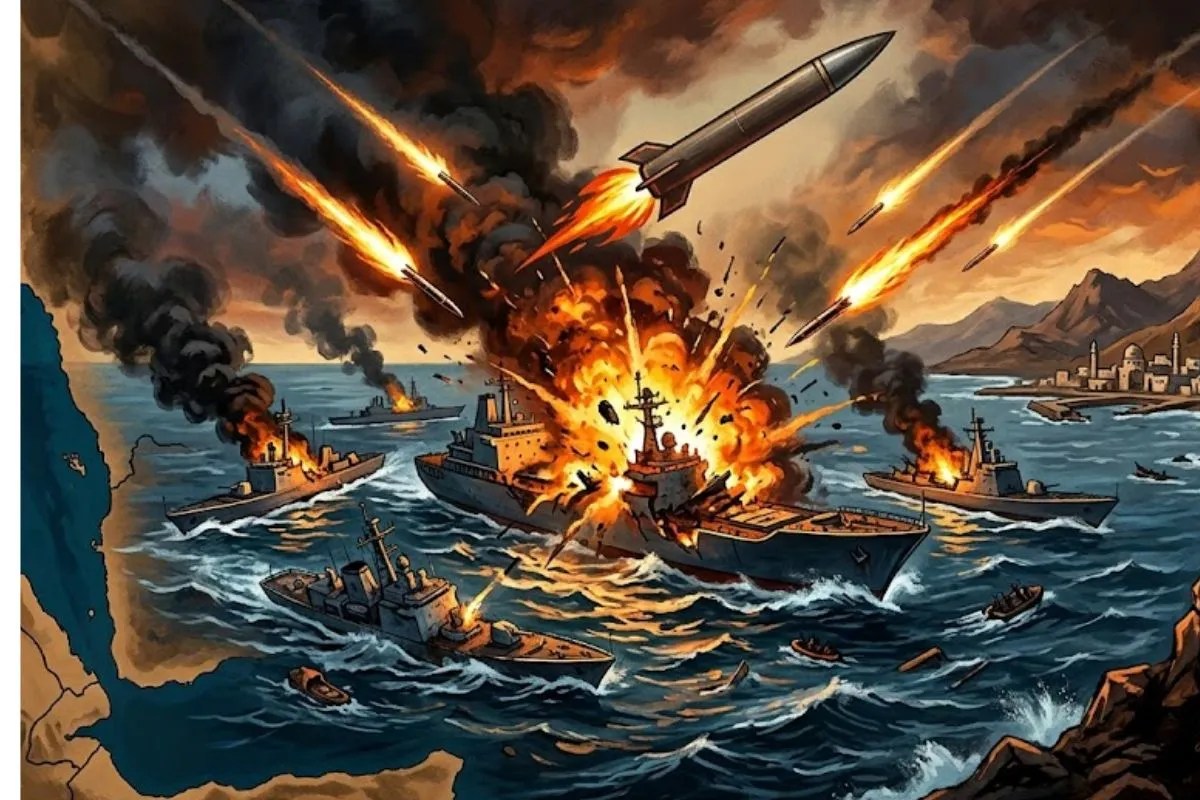
The Red Sea has turned into a volatile theater for modern naval warfare. You’ve likely seen headlines about the recent strike near the coast of Mocha, where Houthi rebels claimed to have crippled a Saudi-led coalition landing ship and several escort warships. They didn’t just fire a few warning shots. They reportedly used ballistic missiles to deliver a direct, high-impact blow.
Most people don’t realize how precarious the situation has become. This isn't just a regional skirmish. It’s a calculated escalation that threatens the global supply chain, yet it feels like the world is treating these events as background noise. When you analyze the tactics used by these groups, you see a shift. They aren’t relying on old-school sea mines anymore. They’re using precision-guided technology to turn the narrow, congested waterways of the Bab-el-Mandeb Strait into a death trap for coalition vessels.
Understanding the tactical shift
The Houthi military spokesperson, Yahya Saree, was clear about their intent. They are monitoring troop movements and logistics chains with surprising accuracy. By hitting a landing ship—a vessel designed specifically to move troops and heavy equipment to shore—the Houthis are signaling that no coastal reinforcement is safe.
If you’ve followed maritime security long enough, you know that landing ships are notoriously difficult to defend against saturation attacks. Once a missile lock is confirmed, there’s very little time for counter-measures. What makes this particular incident stand out is the claim that they hit multiple warships in a single coordinated effort. This implies they have either improved their intelligence gathering or received significant external support to track these movements in real-time.
The logic of the blockade
The Houthis are calling this a "blockade for a blockade." Their justification is rooted in the long-standing Saudi-led restrictions on Yemeni ports. They’ve essentially taken a leaf out of standard military doctrine: if you want to force an opponent to reconsider their strategy, you make the cost of maintaining it unbearable.
Is this sustainable for them? Probably not in the long run. But in the short term, it creates massive headaches for regional security forces. It’s a classic example of asymmetric warfare. They don't need a billion-dollar navy to disrupt a superpower-backed coalition. They just need enough cheap, effective missiles to make the sea too dangerous for anyone to transit comfortably.
Why this matters beyond the Middle East
You’re likely asking why this should matter if you’re thousands of miles away. It’s simple: commerce. A significant portion of global trade passes through the Red Sea. When ships are getting hit, insurance premiums for cargo vessels skyrocket. Shipping companies divert their routes, fuel costs climb, and suddenly, you’re paying more for goods at your local store.
The strategy the Houthis are using is designed to draw in international attention. They want to force a confrontation where the Saudi coalition either has to escalate to a full-blown war or retreat from their positions. It’s a lose-lose scenario for the coalition. If they stay, they risk more ships. If they leave, they lose their strategic foothold in Yemen.
What experts actually see
If you look at the raw data, the effectiveness of anti-ship ballistic missiles (ASBMs) has been a debated topic for years. Now, we are seeing the theory put into practice. The reliance on these systems means that traditional naval superiority is no longer a given. A smaller, more agile force can now threaten a much larger one.
The real danger here isn't just the damage done to specific ships. It’s the uncertainty. When maritime commanders can’t be sure if a stretch of water is clear, they become paralyzed. That paralysis is exactly what the Houthis are aiming for. They’ve turned the water into a weapon, and frankly, it's working better than most intelligence analysts predicted.
Next steps for regional stability
Don’t expect this to end because of a diplomatic statement. The cycle of retaliation is currently in full swing. To actually change the situation, three things would need to happen:
- Intelligence suppression: The coalition needs to neutralize the Houthi radar and surveillance networks that allow them to spot these ships in the first place.
- Increased air defense density: Ships operating in the Red Sea need vastly improved point-defense systems, though this is difficult given the number of vessels involved.
- Political recalibration: Without a political settlement that addresses the underlying Yemeni port blockades, the motivation for these attacks won't vanish.
The conflict in the Red Sea is a stark reminder that technology has democratized destruction. You don't need a massive state-run military to project power into one of the world's most critical maritime chokepoints. Keep a close eye on the maritime insurance rates and carrier diversion reports. Those will tell you the real story long before the news cycle catches up.