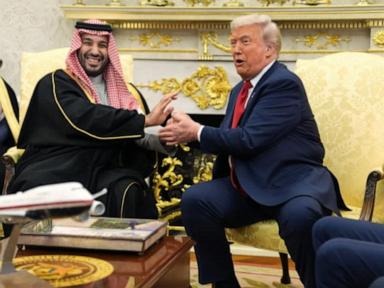
Washington just made a massive bet on Middle East stability, and the stakes couldn't be higher. By signing a landmark 123 Agreement with Riyadh, the White House has opened the door for American companies to build civilian nuclear power in Saudi Arabia. On paper, it sounds like a pragmatic business win. Look closely at the fine print, though, and you'll see a geopolitical tightrope walk that could easily go wrong.
The deal paves the way for Saudi Arabia to enrich uranium on its own soil. For decades, American foreign policy insisted on the "Gold Standard" for nuclear cooperation—meaning partner countries had to give up domestic enrichment and agree to rigorous, unannounced inspections. That requirement is gone.
If you're asking why Washington gave up that leverage, the answer comes down to competition and cash. But skipping key nonproliferation guardrails creates dangerous precedents in a region that's already on edge.
What Saudi Arabia Gains and Why Washington Yielded
Saudi Crown Prince Mohammed bin Salman has made no secret of his intentions. The kingdom wants to shift away from burning its own crude oil just to keep the air conditioning running in desert summers. Nuclear power offers massive, clean baseload electricity.
Riyadh held a strong hand during negotiations. If the United States refused to provide nuclear technology without strict restrictions, Saudi Arabia threatened to buy reactors from China's state nuclear firm or Russia's Rosatom. Neither Beijing nor Moscow demands strict nonproliferation agreements.
American negotiators faced a tough choice. They could stand firm on nonproliferation principles and watch billions of dollars in reactor contracts go to foreign rivals. Or they could sign the deal, lock in decades of commercial partnership for American firms like Westinghouse, and keep some degree of visibility over the Saudi nuclear program. Washington chose the commercial option.
The Nonproliferation Safeguards We Just Gave Up
The biggest problem isn't nuclear power. It's uranium enrichment.
Centrifuges that enrich uranium to low levels for power reactor fuel use the exact same technology required to enrich uranium to weapon-grade levels. Once a country builds domestic enrichment infrastructure, it masters the fuel cycle. That gives them latent nuclear weapons capability.
In previous nuclear deals, like the 2008 agreement with the United Arab Emirates, the U.S. required the partner nation to sign the IAEA Additional Protocol. That protocol gives international inspectors wide latitude to check suspected nuclear sites without warning.
Riyadh resisted accepting the Additional Protocol. Nuclear experts like Harvard's Matthew Bunn have pointed out that waiving this requirement creates a glaring loophole. Without those inspection powers, verifying that material isn't being diverted into a covert military program becomes far more difficult.
Regional Fallout Across the Middle East
You can't evaluate this agreement in a vacuum. Iran has spent decades enriching uranium while enduring heavy Western sanctions. When Tehran looks across the Persian Gulf and sees its chief regional rival getting U.S. support for domestic enrichment without agreeing to intrusively strict inspections, its leaders won't back down on their own program. It makes demanding full IAEA transparency from Iran almost impossible.
Israel views the deal with intense concern as well. While Israeli officials share Washington's interest in containing Iran, a nuclear-capable Saudi Arabia changes the strategic math long-term.
There is also intense pushback at home. Families of 9/11 victims have voiced strong opposition to the deal, citing lingering grievances over Saudi Arabia's past role and raising safety concerns about granting advanced nuclear capabilities to the kingdom.
Where Things Go from Here
The immediate next step is congressional review. Lawmakers in Washington will attempt to attach stricter oversight rules or mandate stronger reporting from the Department of Energy before full implementation begins.
If you want to track how this deal unfolds in practice, keep an eye on these milestones:
- Look for whether Congress demands formal side agreements regarding IAEA inspection access.
- Watch for commercial contract announcements involving U.S. reactor manufacturers like Westinghouse.
- Monitor diplomatic reactions from Tehran regarding their own enrichment benchmark targets.