High up on the Pajarito Plateau in northern New Mexico, a small county of roughly 19,400 people holds a record no major metropolis or Ivy League college town can touch. According to recent U.S. Census Bureau data, 19.7% of adults aged 25 and older in Los Alamos County hold a doctoral degree. Nearly one out of every five grown-ups you pass on the trail or at the grocery store holds a PhD.
Compare that to the national average of 2.5%. Los Alamos has nearly eight times the density of doctorates found in the rest of the country.
The academic footprint does not stop with doctorates. About 69.7% of adult residents in the county hold a bachelor's degree or higher, compared to 35.7% nationwide. High school graduation rates sit at a staggering 98.3%.
Why does a tiny county covering just 109 square miles cluster so much brainpower in one spot? The short answer is Los Alamos National Laboratory. The longer answer involves World War II secrets, cold war budgets, high-tech supercomputers, and a unique local ecosystem that turns scientific specialization into a way of life.
From Secret War Outpost to Permanent Research Hub
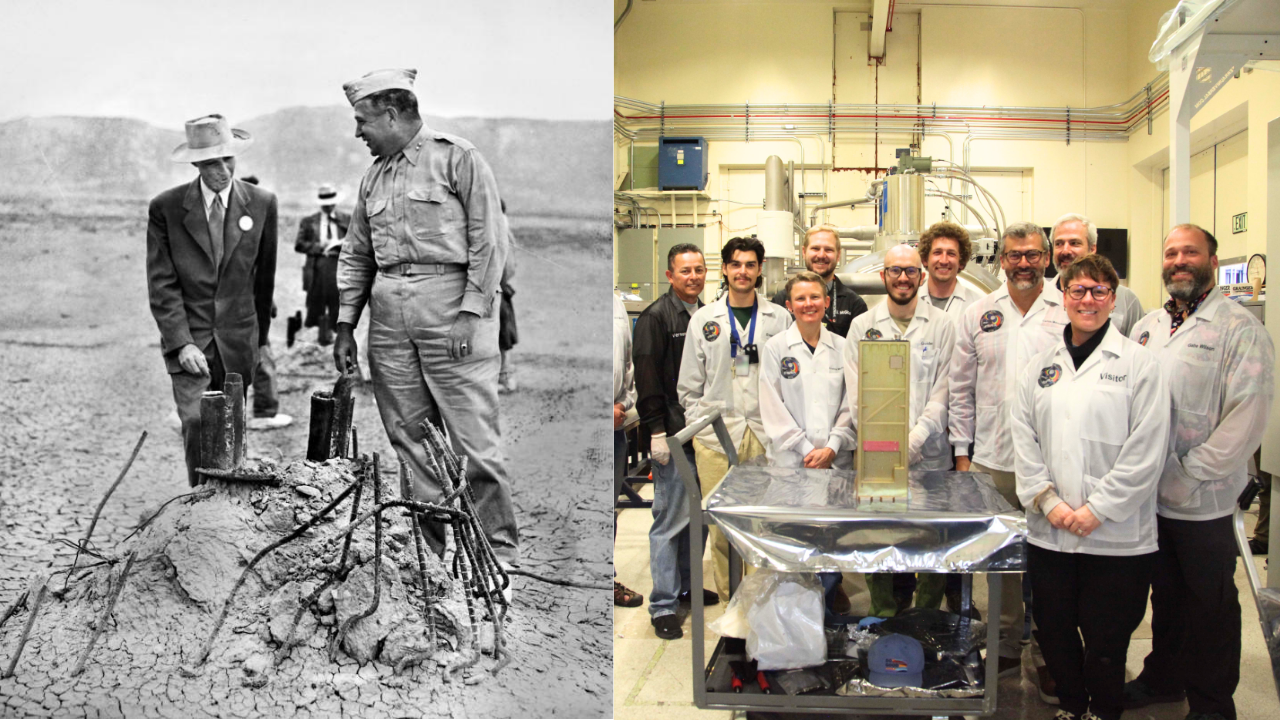
Before 1943, Los Alamos was mostly pines, canyons, and a private ranch school for boys. That changed when theoretical physicist J. Robert Oppenheimer and General Leslie Groves chose the remote mesa as Site Y for the Manhattan Project. They needed extreme isolation to build the world's first nuclear weapons without enemy detection.
The government gathered top scientific minds under barbed wire. J. Robert Oppenheimer, Enrico Fermi, Richard Feynman, Hans Bethe, Edward Teller, and Stanislaw Ulam lived and worked in temporary wooden barracks. Thousands of staff moved to the plateau overnight.
When World War II ended, many expected the facility to close down. It didn't.
Instead, the federal government converted the site into a permanent national laboratory under what is now the U.S. Department of Energy. Rather than dismantling the scientific infrastructure, Washington doubled down on defense research, nuclear physics, and advanced engineering. Generations of specialized researchers moved in, established roots, and stayed.
How the Numbers Stack Up
The math behind Los Alamos's demographic anomaly is straightforward when you look at employer data.
Los Alamos National Laboratory employs over 14,000 workers. The entire population of Los Alamos County sits around 19,400. Even taking into account employees who commute from Santa Fe, Espanola, or Albuquerque, the lab dominates the local economy like few other employers in America.
+-------------------------------------------------------------+
| County Educational Attainment (Adults 25+)                  |
+--------------------------+-----------------+----------------+
| Degree Level             | Los Alamos Co.  | U.S. Average   |
+--------------------------+-----------------+----------------+
| Doctorate (PhD)          | 19.7%           | 2.5%           |
| Bachelor's or Higher     | 69.7%           | 35.7%          |
| High School Diploma      | 98.3%           | 89.1%          |
+--------------------------+-----------------+----------------+
For major research roles at national labs, a PhD isn't just an extra credential. It's often the baseline requirement for employment. Positions in theoretical physics, weapons stockpile stewardship, material science, supercomputing, and bioscience require deep technical training. As a result, the lab recruits heavily from top graduate programs across the world, offering competitive salaries and access to research equipment that university departments simply cannot match.
What Happens When 1 in 5 Neighbors Has a PhD
A high concentration of advanced degrees alters daily life in predictable and surprising ways.
- Public Schools Perform at Peak Levels: Local schools routinely rank among the best in New Mexico. Parent involvement is intense. Science fairs in Los Alamos look less like papier-mache volcanoes and more like university poster sessions.
- Property Values Stay High: Housing supply is strictly constrained by geography and surrounding public land. Demand from high-earning laboratory staff keeps home prices high, creating a tight real estate market.
- Civic Engagement Is Intense: Town halls, school board meetings, and planning commission hearings tend to feature detailed data presentations from citizens who analyze policy with analytical rigor.
- Small-Town Retail Realities: Despite high household incomes, commercial development remains modest. Most residents travel 35 miles to Santa Fe for major retail shopping, keeping the town center small and focused on local services.
Looking Beyond Weapons Testing
While nuclear security remains core to the laboratory's mission, research fields at the site have expanded significantly over the decades.
The lab hosts some of the world's fastest supercomputers used for complex simulations. Researchers work on climate modeling, epidemiological tracking, quantum computing, biological security, and artificial intelligence.
Because experimental nuclear testing ceased in the early 1990s, scientists rely on high-performance computing to maintain the nuclear stockpile without underground explosions. This shift toward advanced modeling drove hiring even further into specialized fields like computational physics, applied mathematics, and software engineering.
Challenges Facing America's Most Educated Spot
Having a high density of researchers creates unique local issues.
Housing availability is a chronic problem. Bordered by the Bandelier National Monument, Pueblo lands, and National Forest terrain, Los Alamos has little room to grow geographically. Young researchers hired by the lab often struggle to find starter homes, forcing long daily commutes up the canyon roads.
There's also a stark contrast between Los Alamos and surrounding counties. While Los Alamos County ranks high in household income and educational metrics, neighboring Rio Arriba County faces distinct economic hurdles. That gap creates complex regional dynamics in Northern New Mexico.
How to Explore the History and Science of Los Alamos
If you're interested in visiting or researching the area, here are straightforward ways to experience it firsthand.
- Visit the Bradbury Science Museum: Located in downtown Los Alamos, this free museum offers public exhibits on Manhattan Project history, supercomputing, and active lab projects.
- Explore Manhattan Project National Historical Park: Tour historic sites like the Oppenheimer House and Fuller Lodge to see where wartime research happened.
- Check Job Listings Directly: If you hold a STEM degree and want to work at the facility, explore career openings directly on the official Los Alamos National Laboratory portal (
lanl.gov). - Drive the Jemez Mountain Trail Scenic Byway: Experience the high-altitude terrain that led Oppenheimer to select this isolated plateau over eighty years ago.