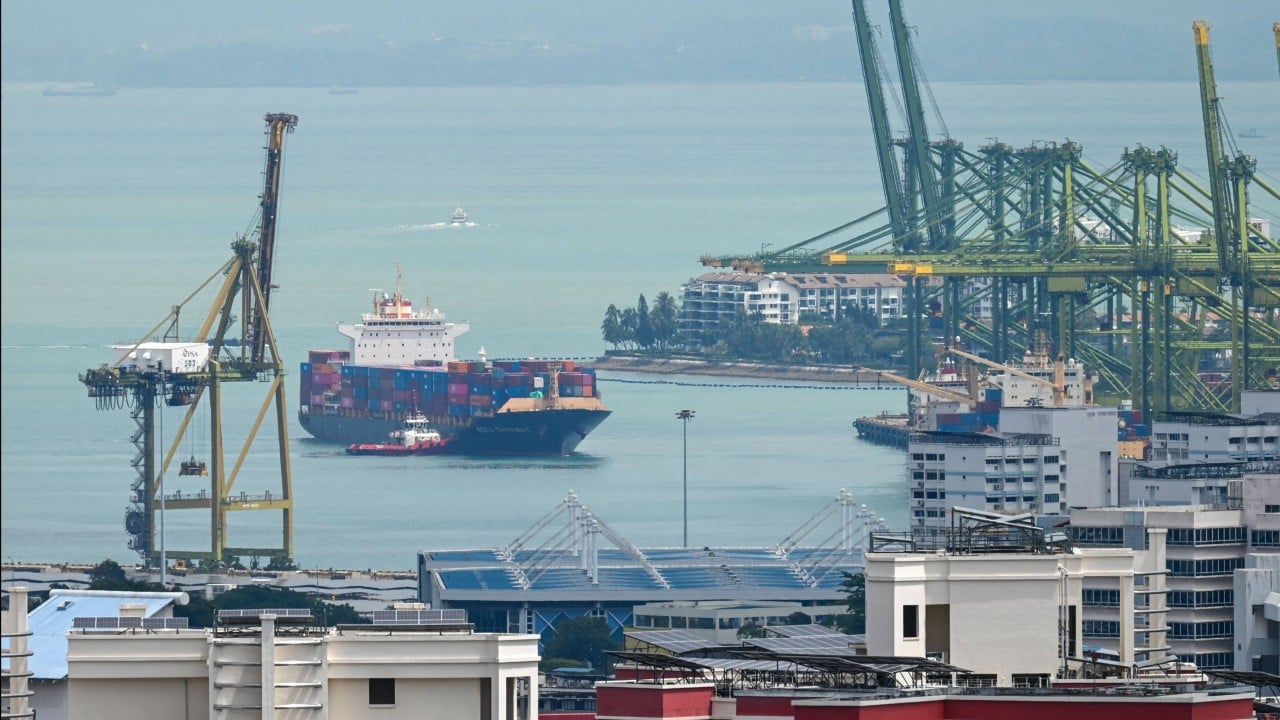
When Prime Minister Lawrence Wong announced plans at the National Day Rally to merge several southern offshore islands into a massive new western landmass, urban planners didn't just look at maps—they looked at the periodic table and energy security metrics.
Singapore is out of space. If you want to transition an entire sovereign economy to net-zero carbon systems while keeping heavy industry running, you cannot do it on rooftop solar panels alone. You need high-density power, and you need physical territory far away from civilian housing blocks to host it.
That is why the proposed merger of islands like Pulau Semakau, Pulau Bukom, and Pulau Sudong has sparked an immediate wave of nuclear power speculation.
Solving the Land Constraint Puzzle
Singapore has mastered the art of artificial land creation. Decades ago, the government stitched together multiple islets to form Jurong Island, turning a collection of mudflats into a global petrochemical powerhouse.
History is repeating itself with a much higher technological stakes label attached. The new western island proposal creates a blank canvas spanning decades of development.
Why does this project instantly trigger nuclear conversations? Because modern low-carbon energy infrastructure requires enormous footprints and specific geographical traits.
- Direct access to seawater for massive cooling loops is non-negotiable for thermal or nuclear generation.
- Distance buffers are legally and safely required for advanced power infrastructure.
- Fragmented small islets cannot support integrated, multi-source energy grids, but a single consolidated mega-island can.
Analysts note that designing an energy hub from scratch gives engineers room to combine electricity imports, large-scale storage, green hydrogen, and advanced small modular reactors in one localized security zone.
The Nuclear Reality Check
Before anyone starts sketching reactor containment domes on the new southern shores, it pays to look closely at official timelines. Singapore hasn't made a final decision to deploy nuclear energy.
The government plans to undergo a formal International Atomic Energy Agency readiness assessment starting in 2027. This evaluation tests nineteen separate competency areas, ranging from regulatory frameworks to waste management logistics and emergency response protocols.
Building the landmass is the easy part. Proving institutional and technical capability to operate splitting atoms safely within a few miles of a major metropolis is an entirely different beast. Small modular reactors offer passive safety features that older generations of nuclear plants lacked, but public acceptance remains a hurdle in a densely populated nation.
Geopolitical Pressure Forces Hard Choices
Energy security isn't an abstract academic debate in Southeast Asia anymore. Recent global supply chain shocks and Middle Eastern shipping lane instabilities have exposed how vulnerable import-dependent economies are to crude oil and liquefied natural gas disruptions.
When 60 percent of regional crude supplies travel through contested maritime chokepoints, domestic energy diversification shifts from a nice-to-have environmental goal to an absolute national survival strategy.
If Singapore intends to achieve net-zero power systems without crippling its industrial base, relying solely on imported green electricity or intermittent regional grids leaves too many variables open to geopolitical meddling. Having an offshore territory capable of housing high-density, low-carbon generation plants gives policymakers options they simply do not possess today.
The island merger plan is a fifty-year bet on engineering resilience. Whether those future acres eventually host small modular nuclear reactors or advanced hydrogen terminals, the project ensures that Singapore dictates its own industrial destiny rather than waiting for external energy markets to stabilize.