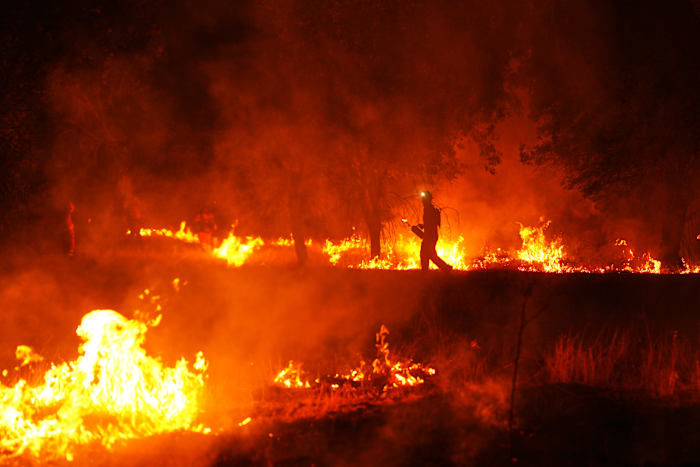
When a wildfire grows too powerful to stop, crews stop fighting the fire and start saving lives. That is the stark reality facing emergency teams in central Spain, where a record-shattering blaze near Madrid has forced thousands from their homes and shattered historical expectations.
For veterans like Javier García, a technician with Spain's Forest Fire Reinforcement Brigades with two decades of experience, the current environment has no precedent. The out-of-control fire in the Ávila hills west of Madrid has consumed 500 square kilometers—an area five times the size of Barcelona. It forced 25,000 residents to flee rural villages as walls of flames moved too fast for direct attacks.
The Reality Beyond Extinction Capacity
Wildfires used to follow predictable seasonal patterns. Crews would deploy directly into wilderness areas, cutting lines and dousing hotspots before flames reached populated zones. Those days are gone.
Raúl Guerrero, a 29-year-old firefighter in Castilla y León, notes that many modern blazes sit entirely beyond human extinction capacity. When a fire generates enough heat and wind virulence, standard suppression tactics fail completely.
"No matter what you do, you can't put it out," Guerrero explains. That realization brings a heavy sense of helplessness to crews working exhausting 12-hour shifts.
The numbers tell a staggering story of escalation. According to Ecology Minister Sara Aagesen, fires have scorched 1,530 square kilometers across Spain through the first half of the year. That figure marks a sixfold increase compared to the same period in 2025.
Why Modern Landscapes Burn Differently
Several compounding factors explain why current fires behave with such unprecedented fury:
- Extended Danger Windows: High fire risk seasons used to last 15 days annually. Now, emergency crews maintain high-alert status for 30 to 40 days or more.
- Fuel Load Accumulation: Decades of rural depopulation mean fewer people clear underbrush, leaving dense vegetation right up against property lines.
- Intense Drought Cycles: Consecutive dry winters combined with severe summer heat waves turn regional undergrowth into pure gunpowder.
Shifting Priorities on the Ground
With direct suppression often impossible, emergency commanders have altered their operational frameworks. Tactical priorities now follow a strict hierarchy.
First come human lives. Second come homes and community infrastructure. The forest itself comes last.
Firefighters spend grueling shifts hosing down burning canopies and carving away narrow defensive perimeters around vulnerable towns. While the Ávila fire continues to challenge local units, other massive systems—including a recent 320-square-kilometer burn in Guadalajara—prove that these intense conditions are becoming the new baseline across Southern Europe.
Clearing defensible space around rural properties remains critical. Without year-round brush removal, natural landscapes will continue to feed extreme blazes that outmatch any modern fleet of aircraft or water tenders.