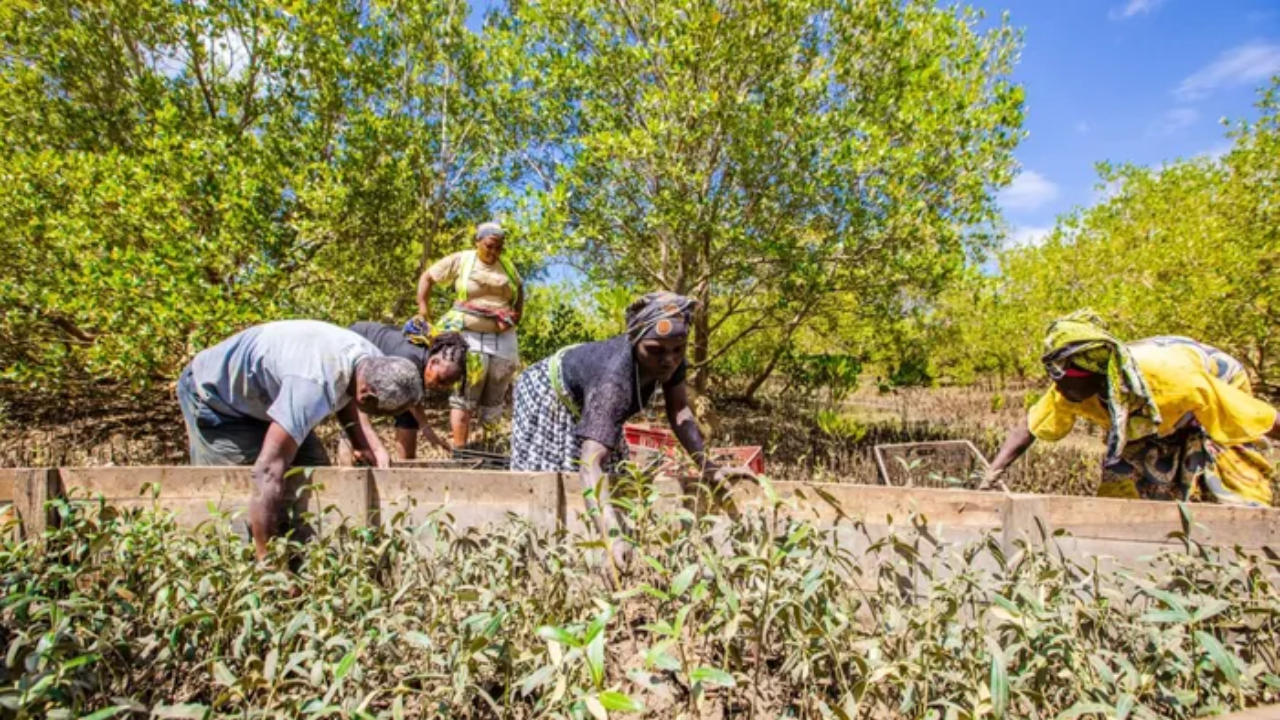
More than 4,000 students and scouts descended into the thick mud of Mombasa County to plant thousands of mangrove seedlings. They weren't just passing time. They were smashing global records and rebuilding a fragile coastline.
Organized to mark World Mangrove Day, the event at the Jomvu Kuu Mangrove Site brought together 4,196 participants under the coordination of the Kenya Forest Service (KFS) and the Kenya Scouts Association (KSA). Out of that massive turnout, 4,124 individuals successfully met the rigorous logistical and synchronisation standards demanded by Guinness World Records, easily eclipsing the previous mark of 3,001. If you liked this piece, you might want to check out: this related article.
Inside the Record-Breaking Mangrove Blitz
Setting a world record in a muddy tidal swamp takes more than just rounding up a crowd. Guinness World Records enforces strict compliance rules. You can't just throw seeds in the dirt and hope for the best.
To keep things legitimate, KFS trained 50 forest rangers to act as official stewards. Each steward monitored 100 participants, making sure every single mangrove propagule went into the ground at the correct spacing and proper depth. Independent witnesses, including Dr. Clement Ng'oriareng from KFS, oversaw the execution. Every single minute of the mass planting was documented via video, photography, and physical counts. For another perspective on this story, refer to the recent coverage from The New York Times.
The energy on the ground was chaotic, muddy, and electric. Young people waded waist-deep through coastal wetlands, trading clean shoes for caked mud to secure the future of their local marine ecosystems.
Why Mangrove Restoration Actually Matters
Headlines love a good world record. But the real story happens long after the cameras leave.
Mangrove forests are absolute powerhouses for the environment. They act as natural shock absorbers for coastlines, shielding villages from severe storm surges and halting coastal erosion. If you want to protect beachfront communities from rising sea levels, concrete seawalls pale in comparison to a healthy mangrove belt.
Beyond physical defense, these trees are elite carbon scrubbers. They lock away carbon dioxide in their waterlogged soils at rates that put tropical rainforests to shame. They also serve as critical nurseries for local fish and crustacean populations. When the mangroves thrive, local fishing economies bounce back right alongside them.
Powering Kenya's National Tree Goal
This massive turnout wasn't an isolated stunt. It plugs directly into Kenya's broader environmental strategy—specifically, the national target to grow 15 billion trees by 2032.
Coastal ecosystems have taken a beating over the decades from commercial development, pollution, and unsustainable logging. Planting trees one by one often fails to move the needle against rapid degradation. Mobilizing thousands of youth at once changes the math entirely. It speeds up habitat recovery while wiring environmental stewardship directly into the next generation.
The evidence packets are off to official adjudicators for final sign-off. But regardless of the final paperwork, thousands of new mangroves are already taking root in the Mombasa mud.
Get outside and support local conservation efforts in your own backyard, or find a community tree-planting initiative to join this weekend.