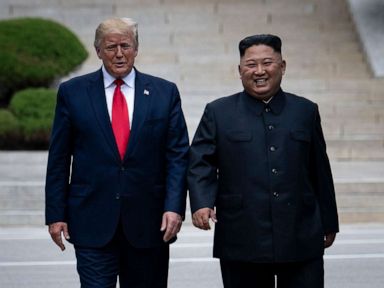
The recent decision by President Donald Trump to scale back joint military exercises with South Korea has ignited a firestorm of debate. If you’ve been paying attention to the headlines, you know the narrative: Trump claims these long-standing drills are "insulting" to North Korean leader Kim Jong Un.
But there’s more to this story than a simple headline. It’s not just about ego or personal relationships. It’s about a calculated, albeit controversial, shift in how the current administration views global commitments, alliance burden-sharing, and the immediate pressures of the ongoing war in Iran.
The logic behind the cutbacks
Trump’s move to order Defense Secretary Pete Hegseth to reduce the scale of the Ulchi Freedom Shield exercises isn't an isolated event. He’s been vocal about his dissatisfaction with these drills for years, viewing them as both a financial burden on the U.S. and a diplomatic obstacle.
He’s framing this through the lens of a "very good relationship" with Kim Jong Un. His argument is straightforward: if North Korea is behaving, why poke the bear with high-intensity war games?
However, look closer at the timing. This isn't happening in a vacuum. The U.S. military is currently dealing with a massive strain on resources due to the conflict in Iran. Munitions are low. Assets like the USS George Washington are being redeployed. Scaling back in the Pacific isn't just a diplomatic olive branch; it’s a practical reality of a military stretched thin.
The alliance friction
The real tension here is between the U.S. and South Korea. Trump hasn't hidden his frustration with Seoul. He recently requested South Korean assistance in the denuclearization effort regarding Iran. When they declined, he made it clear he wasn't happy.
This is the transactional nature of the current administration in full swing. If you aren't helping us with our priority, don't expect business as usual for your regional security.
South Korean officials are in a tough spot. They’re stuck between their primary security guarantor—the United States—and their unpredictable neighbor to the north. While the South Korean presidential office has publicly signaled a desire for "meaningful dialogue" through this new opening, the reality is that many in Seoul are deeply anxious. They’ve spent decades relying on the "big stick" of U.S. deterrence. Now, they are being told that stick might be getting smaller.
Why this matters for the future
If you’re wondering what this means for the average person, it’s about the shifting architecture of Asian security. For years, experts have argued that South Korea needs to take more responsibility for its own defense.
Jennifer Kavanagh of Defense Priorities has pointed out that this might be a necessary, if painful, wake-up call for Seoul. The days of the U.S. automatically footing the bill for every security contingency are being challenged. It’s not just about pulling the rug out from under an ally; it’s about signaling that the era of total dependency is ending.
Consider these key points:
- Resource strain: With the war in Iran costing roughly $37.5 billion, the U.S. military is prioritizing assets elsewhere.
- Transactional diplomacy: Trump’s expectation that allies should support U.S. goals in the Middle East has become a litmus test for support in other theaters.
- The Kim factor: Trump is betting that personal rapport can yield results where traditional diplomacy failed. He’s already expressed interest in a new summit with Kim later this year.
The risks of the strategy
Critics like Zack Cooper at the American Enterprise Institute argue that this is a major strategic blunder. By softening the approach in Asia, the administration might be misreading the room. North Korea hasn’t exactly been quiet; they’ve been accelerating weapons tests and deepening ties with Russia.
Scaling back isn't just a signal to Kim; it’s a signal to China. If the U.S. appears to be wavering in its commitment to South Korea, it creates an opening for other regional players to assert themselves. Deterrence is a delicate game. Once you start eroding it, putting the pieces back together is much harder than simply keeping the status quo.
Practical next steps
If you’re following this closely, keep an eye on the upcoming APEC forum in Shenzhen this November. The potential for a face-to-face meeting between Trump and Kim is high. That will be the real indicator of whether this "soft" approach is a genius play or a dangerous gamble.
Also, watch how the South Korean government shifts its defense spending. If they start moving faster toward indigenous military capabilities, it confirms that the "Trump shock" is effectively forcing a change in regional dynamics. Don't expect a quick return to the massive, loud drills of the past. That model is clearly on its way out.
The situation is fluid, and the implications for regional stability are immense. It's a high-stakes pivot, and the outcome is anything but guaranteed.
Trump calls North Korea 'unthreatening' after reducing military drills
This video provides important context on how the administration is framing its decision to scale back military exercises, highlighting Trump's specific rhetoric regarding the relationship with North Korea.
http://googleusercontent.com/youtube_content/1


