Cold War relics are getting a wild second act. The federal government is aggressively repurposing obsolete nuclear sites to feed America's insatiable appetite for artificial intelligence infrastructure.
If you thought data centers only popped up near empty fields or suburban tech parks, think again. The U.S. Department of Energy just tapped private equity giant Brookfield Asset Management to spearhead a staggering $100 billion data center and power complex at the former Paducah Gaseous Diffusion Plant in western Kentucky.
It is a massive bet on industrial transformation. And it reveals a lot about how Washington plans to win the global tech race against Beijing.
The Anatomy of a Mega Project
Let us look at the raw numbers because they are hard to process. The Paducah project is not just a collection of server racks tossed into a warehouse.
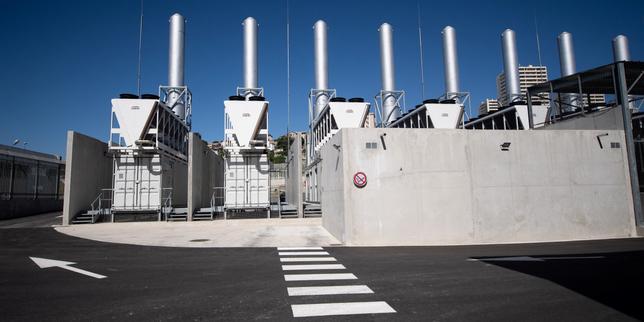
The scope includes a massive 1.8-gigawatt AI data center campus backed by heavy-duty infrastructure. To keep those servers humming, Florida-based NextEra Energy will build 2 gigawatts of natural gas-fired generation alongside 2.6 gigawatts of battery storage. That gas plant will instantly become the largest of its kind in the entire state of Kentucky.
Construction is targeted for completion by 2031. It promises to inject thousands of construction jobs and hundreds of permanent positions into a rural pocket of the state that has spent decades wondering what comes next after the nuclear age.
Energy Secretary Chris Wright recently noted on national television that these retrofitted federal sites will act as economic engines. The administration wants speed, scale, and absolute dominance in machine learning capabilities. Private equity is footing the bill, with roughly 30 percent of the hundred billion dollars directed straight into construction and power equipment, while the rest goes toward high-end semiconductor chips, servers, and routers.
Why Cold War Sites Make Sense
You might wonder why officials are choosing radioactive legacy sites instead of buying empty land elsewhere. The answer comes down to three boring, hard-to-replicate factors: land, water access, and existing transmission lines.
The Paducah site spans roughly 3,550 acres. It has been undergoing a tedious, multi-decade decontamination process since it shut down its uranium enrichment operations back in 2013. The Department of Energy estimates that total cleanup won't wrap up until 2065, carrying a price tag of around $17 billion to tear down old buildings and treat groundwater contamination.
By inviting private tech developers onto these massive plots right now, the government kills two birds with one stone. They offset cleanup stagnation, monetize federal acreage, and bypass the endless permitting bottlenecks that usually plague new greenfield developments.
We saw a preview of this playbook back in March when the Energy Department announced a strikingly similar overhaul at the Portsmouth Gaseous Diffusion Plant in Ohio. South Carolina's Savannah River Site is getting a similar treatment too. The strategy is clear: if you need massive amounts of localized power and space for AI infrastructure, look at the places America used to build its nuclear arsenal.
The Pushback and Real-World Risks
Of course, dumping billions of dollars into a heavy industrial zone does not happen without friction. Local groups and environmental watchdogs are already pushing back against the timeline and the methodology.
A newly formed organization called Protect McCracken County has raised alarms about placing massive industrial expansions right next to vital waterways. Millions of people pull drinking water from the river downstream. Critics argue that sweeping economic projects are moving forward without enough independent scrutiny on environmental and water table impacts.
Then there is the carbon elephant in the room. Building a massive new natural gas plant flies straight in the face of green transition goals. While tech companies love to market their AI models as clean software solutions, the physical reality requires staggering amounts of baseload electricity. Solar panels and wind turbines alone cannot guarantee the 24/7 uptime that heavy machine learning training clusters demand.
Utility watchdogs are also demanding transparency. Regular ratepayers want legal guarantees that they will not get stuck subsidizing the grid upgrades and massive transmission lines required to feed these private corporate tech hubs.
What Happens Next
The blueprint is drafted. Private capital is locked in. The federal government is officially leveraging its Cold War ghost towns to secure a foothold in the future of artificial intelligence.
If you are tracking industrial real estate, energy markets, or tech infrastructure, keep a close eye on state utility regulators in Kentucky. Before a single shovel breaks ground for these new power plants, official power service agreements must clear local regulatory hurdles. Watch how states balance the promise of thousands of jobs against the local cost of carbon emissions and grid stability.
The intersection of national security, heavy energy, and code has officially arrived in rural Kentucky. Expect more federal real estate to flip before the decade is out.