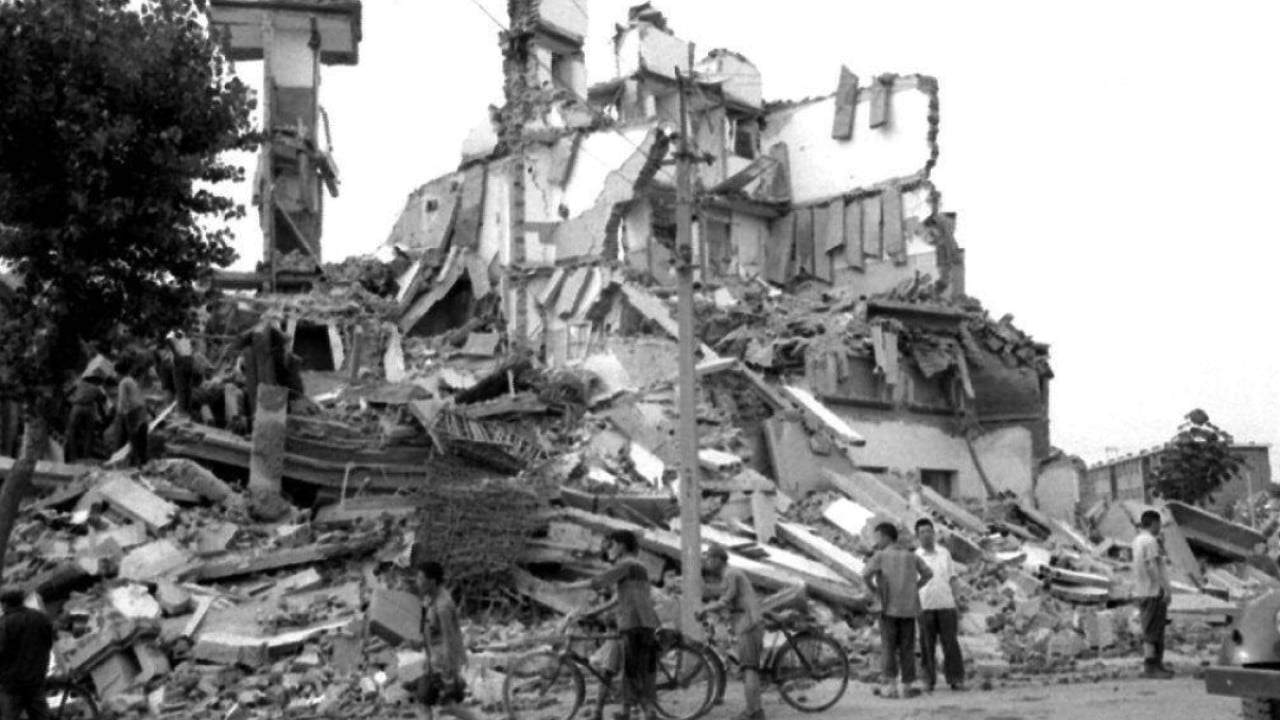
Earth shakes without warning. Buildings crumble into dust before you can blink. On July 28, 1976, that nightmare became a brutal reality for millions of people in Tangshan, China.
It hit at 3:42 in the morning. People were fast asleep. In less than a minute, a magnitude 7.8 tremor wiped a major industrial city off the map. Official records place the death toll above 240,000, making it one of the deadliest natural disasters in human history.
Yet, many people today know very little about it. History books gloss over the sheer scale of the destruction. Let's fix that right now.
The Night the Earth Broke
Tangshan wasn't just a quiet village. It was a bustling coal-mining and heavy-industrial hub. Millions lived packed tightly into brick apartment blocks and concrete structures that stood zero chance against violent seismic activity.
When the fault line ruptured, the shockwaves registered across the globe. The initial tremor lasted roughly 14 to 16 seconds. But the devastation didn't stop there. An aftershock measuring 7.1 struck later that afternoon, crushing rescue workers and trapping survivors who had managed to crawl out of the rubble.
Ground liquefaction turned soil into quicksand. Heavy machinery sank. Water pipes ruptured. Electricity vanished instantly. Total blackness enveloped the city.
The Official Response and the Information Blackout
Back in 1976, political climate played a massive role in how disasters were managed. China was nearing the end of the Cultural Revolution. Authorities kept initial reporting tightly controlled.
Help arrived slowly. Roads were blocked, bridges collapsed, and rail lines twisted like ribbons. Survivors dug through concrete blocks with their bare hands. They used spoons, pots, and broken pieces of metal.
Thousands of medical personnel deployed to the region, facing unbelievable odds. Makeshift hospitals popped up in open fields. Amputations happened without anesthesia. Supplies ran out within hours.
What Modern Seismology Learned from Tangshan
You might wonder why a tragedy from decades ago matters to engineers and city planners today. The answer is simple. Tangshan changed structural engineering forever.
Before 1976, building codes in the region did not account for extreme seismic forces. Structures collapsed inward completely, pancaking floors on top of each other.
Researchers studied the ruins meticulously. They discovered why certain structures survived while everything else flattened. That data directly influenced modern earthquake-resistant construction standards.
- Concrete reinforcement techniques improved drastically.
- City planners learned to avoid building directly over active fault intersections.
- Emergency response frameworks evolved to handle immediate communication blackouts.
Preventing Future Disasters
Earthquakes cannot be stopped. Mother Nature does what she wants. But the impact depends entirely on human preparation.
If you live in a seismically active zone, complacency is your worst enemy. Modern early-warning systems can buy you seconds—sometimes tens of seconds—before the shaking starts. Those seconds matter. They give you time to drop, cover, and hold on.
Check your home today. Secure heavy furniture to walls. Prepare an emergency kit with water, non-perishable food, and basic medical supplies. Know your evacuation routes.
History proves that nature holds all the cards. How we respond defines whether we survive.