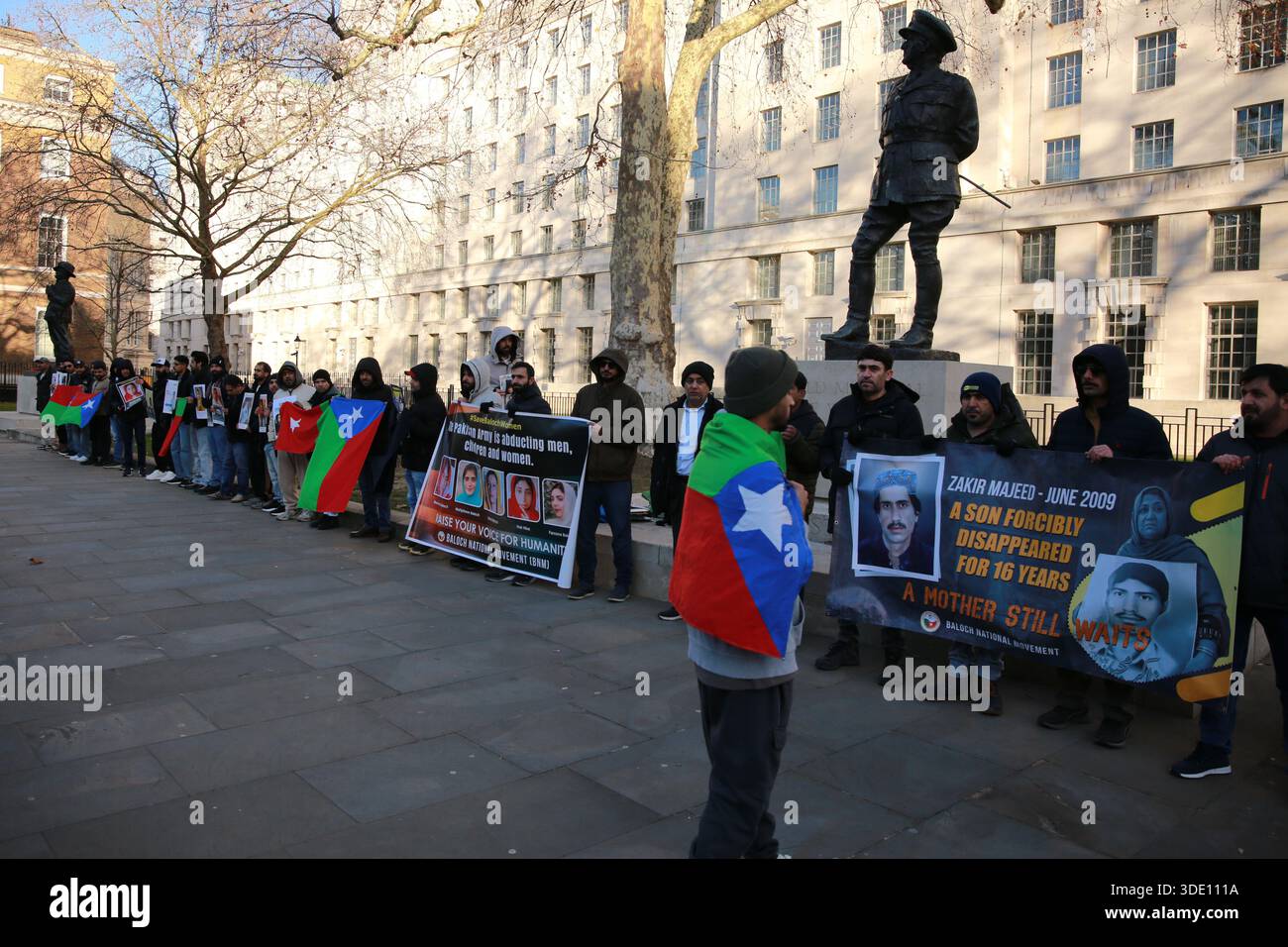
The distance between the dusty, conflict-ridden plains of Surab in Balochistan and the polished pavement of 10 Downing Street in London is thousands of miles. Yet, for the Baloch diaspora, that distance vanished this week. They stood in the heart of London to demand answers about a series of airstrikes that have left a trail of grief back home.
If you’ve been following the situation, you know the narrative from regional news often lacks the intensity of the ground reality. On August 12, 2026, reports surfaced regarding aerial attacks in Surab. The Baloch National Movement (BNM) didn't just issue a press release. They brought the grievance directly to the UK government’s front door.
The Reality Behind the Headlines
Most people hear "airstrikes" and think of large-scale military conflicts. In the context of Balochistan, these events are often isolated, under-reported, and devastating for the families involved. Activists argue these aren't just tactical maneuvers. They characterize them as a systematic attempt to exert control through fear.
Niaz Baloch, a voice representing the demonstrators in London, didn't mince words. He emphasized that women and children were among those caught in the August 12 incident. When you look at the images circulating from the ground—though often grainy and difficult to verify—the sentiment is clear: this is a humanitarian crisis unfolding away from the gaze of major global media outlets.
The core of the frustration isn't just the strike itself. It’s the total lack of access for independent observers. How can a conflict be verified if journalists and human rights groups aren't allowed to enter the affected areas? That’s the question the protesters want the UK to help answer.
Why the UK Government Matters Here
You might wonder why a protest in London matters to the situation in Pakistan. It’s about diplomatic pressure. The UK maintains specific lines of communication with Pakistan. Baloch activists are pushing for those channels to be used to demand transparency.
Basically, they are asking for three specific things:
- Independent Investigations: They want a neutral party to enter Surab and determine exactly what happened on August 12.
- Access for Organizations: They want the international community to stop relying solely on state-provided narratives and see the reality on the ground.
- Accountability: They want it known that aerial power against civilian populations isn't acceptable in any context.
The Pattern of Silence
If you pay attention to the reports coming out of Balochistan over the last year, this isn't an isolated event. There has been a rising frequency of protests across the province, often triggered by "enforced disappearances" and what residents describe as military intimidation.
The protest at 10 Downing Street is a strategic move to break the international silence. It’s an attempt to force the issue into the European political sphere. When human rights records are debated, having photographic and firsthand accounts presented in a capital city like London makes it much harder for officials to look the other way.
What Happens Next
Protests in London don't automatically stop jets in Balochistan. Anyone claiming otherwise is selling you a fantasy. But these demonstrations do build a documentation trail. They force the issue onto the desks of foreign secretaries and international human rights committees.
For those watching this unfold, the next phase is critical. It involves:
- Monitoring the response: Will the UK government officially raise these concerns with their Pakistani counterparts?
- Engaging international bodies: Expect more pressure to be applied to the United Nations and European Union representatives to demand investigative access.
- Documenting the ground reality: The burden of proof remains on those documenting the strikes. Keeping records, gathering survivor testimonies, and sharing verified data remains the most important work happening right now.
The situation in Balochistan remains volatile. The protesters in London have made their point loud and clear. Now, the ball is in the court of those with the diplomatic power to actually demand the access that these communities so desperately need.