The global supply chain isn't nearly as reliable as you think. Right now, a massive bottleneck at the Panama Canal is proving just how fragile our trade routes really are.
You’ve likely seen headlines about restricted transit numbers due to El Niño. While that’s the immediate trigger, the situation is far more complex than just "low rainfall." If you’re involved in shipping, logistics, or even just keeping an eye on your investment portfolio, you need to understand that this isn't a temporary blip. It’s a systemic design flaw being exposed by a changing climate.
The Water Management Problem
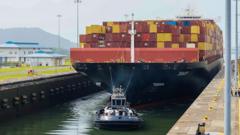
Most people assume the Panama Canal is just a big ditch connecting two oceans. It’s actually a sophisticated hydraulic machine. Every time a ship passes through the locks, it requires millions of gallons of freshwater to lift the vessel over the Continental Divide.
That water comes from Gatun Lake. When El Niño kicks in, rainfall drops, the lake level dips, and the Authority has no choice but to restrict the draft (how deep a ship sits in the water) and the total number of transits per day.
This is the hidden cost of the canal. If there isn't enough water, the canal simply cannot function at capacity. It’s that simple. It doesn’t matter how many billions you spent on the expansion project; physics always wins.
Why The 32 Ship Limit Actually Matters
When the Panama Canal Authority cuts transits from 36 down to 32, it sounds like a small, manageable number. It isn't. In the world of maritime logistics, that’s a massive drop in throughput.
Think about the ripple effect:
- Wait Times Surge: Ships that can't get a slot have to anchor or choose alternative, longer routes.
- Cost Increases: Shippers are already paying high fees for priority slots. Expect those to skyrocket as demand outstrips supply.
- Retail Impacts: If you’re expecting goods from Asia to reach the US East Coast, expect delays. Ships carrying consumer electronics, furniture, and perishable goods are all competing for a shrinking number of available slots.
I’ve tracked these patterns for years. When the canal slows down, the costs don't just stay in Panama; they travel directly to your wallet in the form of higher shipping surcharges.
The Broader Context of Disrupted Trade
We are living in an era where key maritime chokepoints are failing simultaneously. Between the ongoing instability in the Red Sea and these climate-driven restrictions in Panama, the global maritime industry is being squeezed from both ends.
Shipping companies are tired of the guesswork. They’re being forced to look at trans-continental rail options or simply shifting their supply chains back to the US West Coast, adding truck or rail transit time to reach the interior of the country. This isn't efficient, but it’s becoming the only way to avoid the uncertainty of the canal.
Dealing With The Reality Of Climate Volatility
If you're managing logistics or procurement, stop betting on "normal" operations. The era of predictable, cheap, and fast passage through the Panama Canal is over for the time being.
What you should do:
- Audit your supply routes: Are you too dependent on canal-dependent lanes? If so, start testing alternative Pacific-to-Atlantic routes.
- Increase safety stock: Don't count on Just-In-Time delivery when the transit times are fluctuating by weeks. Build a buffer.
- Monitor the ACP data daily: Don't rely on general news. The Panama Canal Authority publishes daily draft and transit data. Watch those numbers like a hawk.
The canal will eventually return to full service, but don't hold your breath for it to happen overnight. El Niño doesn't just go away because we want it to. We are looking at a long-term reality where water availability dictates the speed of global commerce. Plan accordingly.