The Strait of Hormuz is the single most dangerous piece of real estate in the global energy market. It doesn't matter how many pipelines are built in the desert. It doesn't matter how much money is spent on alternative routes. If you need oil or gas from the Persian Gulf, you basically have to go through here.
Recent talk about bypassing this vital waterway is ignoring basic geography. You can't move oil fields. They are fixed where the geology put them. If the wells are in the Gulf, the product has to leave the Gulf.
Why pipelines are not the easy answer
Proponents of alternative energy routes love to mention pipelines. They talk about expanding existing infrastructure or building massive new links across Saudi Arabia or the UAE. It sounds clean on a map. It's a logistical nightmare in reality.
Look at the timelines. Industry estimates for major pipeline expansions often point to 2030 or beyond. That is not a quick fix. That is a multi-year, multi-billion-dollar gamble. Pipelines have massive maintenance costs and they are notoriously vulnerable to political interference, sabotage, or simple mechanical failure.
Even if you manage to lay thousands of miles of pipe, you are still limited by capacity. Tankers carry millions of barrels daily. A pipe is a trickle by comparison. When transit volumes through the Strait drop—like the 80% decline seen since mid-2026—the global market feels the shock immediately. Pipelines can't absorb that kind of capacity hit.
The geography of oil production
Geopolitics often forgets that oil isn't a digital asset you can re-route with a few clicks. It's a heavy, physical commodity that requires massive, specialized infrastructure.
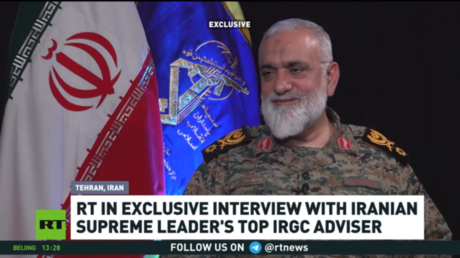
The Persian Gulf is the production heart of the world. It is where the lowest-cost, highest-volume oil extraction happens. You cannot simply replicate this elsewhere. When a military official like Mohammad Reza Naqdi states that Hormuz cannot be replaced, he's stating a basic economic reality. It's not just about military control of the water; it's about the fact that the entire energy supply chain is tied to this specific exit point.
What is actually happening now
We are seeing a desperate scramble by Gulf states to find options. The UAE is pushing ahead with new pipeline capacity. Saudi Arabia is looking at its East-West options again. These aren't signs that Hormuz is obsolete. They are signs that the risk of using it has become an existential threat to national revenue.
When transit is disrupted, the world doesn't just see a slight price increase. We see a structural shift in how energy is priced and delivered. The disruption isn't a temporary blip; it's a permanent change in risk assessment for every shipping firm and insurance house in the world.
Assessing the long-term risk
If you are following energy markets or trying to understand why oil prices are behaving the way they are, stop looking for a "bypass" that solves the problem. There isn't one.
The reality is that we are locked into a geography that hasn't changed in millions of years. As long as the world remains dependent on the oil buried under the Gulf, the Strait of Hormuz will hold the ultimate leverage.
Building more pipelines is a defensive move, not a replacement strategy. It's an attempt to mitigate risk, but it's an expensive and slow one. Investors and analysts need to stop treating these bypass projects as a solution. They are merely an insurance policy that hasn't paid out yet.
The volatility in this region isn't going away. Energy security in 2026 and beyond is built on managing the bottleneck, not pretending it can be paved over. Plan for higher shipping costs, increased insurance premiums, and constant geopolitical tension. That is the new normal.